Kylon for an AI content factory
A content factory where every piece gets a person's yes.
Briefs come in, agents research, draft, design and schedule, and the people who own the brand approve each piece before it goes out. The same steps run for every video, post, newsletter and creator campaign.
A repeatable line from brief to published piece.
A content factory is the system a team builds so content ships on a schedule instead of on heroics. Warmly's guide lists the parts as research and planning, brief creation, content writing and editing, and publishing. In Kylon each station is a use case you can start in one click, and agents work every station while people keep the decisions.
Plan the work
Campaigns, briefs and the calendar in one Room for the marketing team. See marketing use cases.
Draft every format
Outlines, social copy, thumbnails and calendar slots from one approved brief. See the content operating system.
Make the video
Reviewers mark the cut on the frame, the agent remakes it and drafts the site change. See how we make our videos.
Turn releases into posts
Each merged release becomes a changelog and launch posts for each channel. See code to content.
Run creator campaigns
Find creators, draft outreach, review their drafts and track every post. See creator marketing.
Keep the roster
Every creator, rate and conversation in one record the whole team reads. See the influencer CRM.
The line, piece by piece
Three stations of the factory as they look in Kylon. Each links to its full use case below. Companies, people and figures are invented.
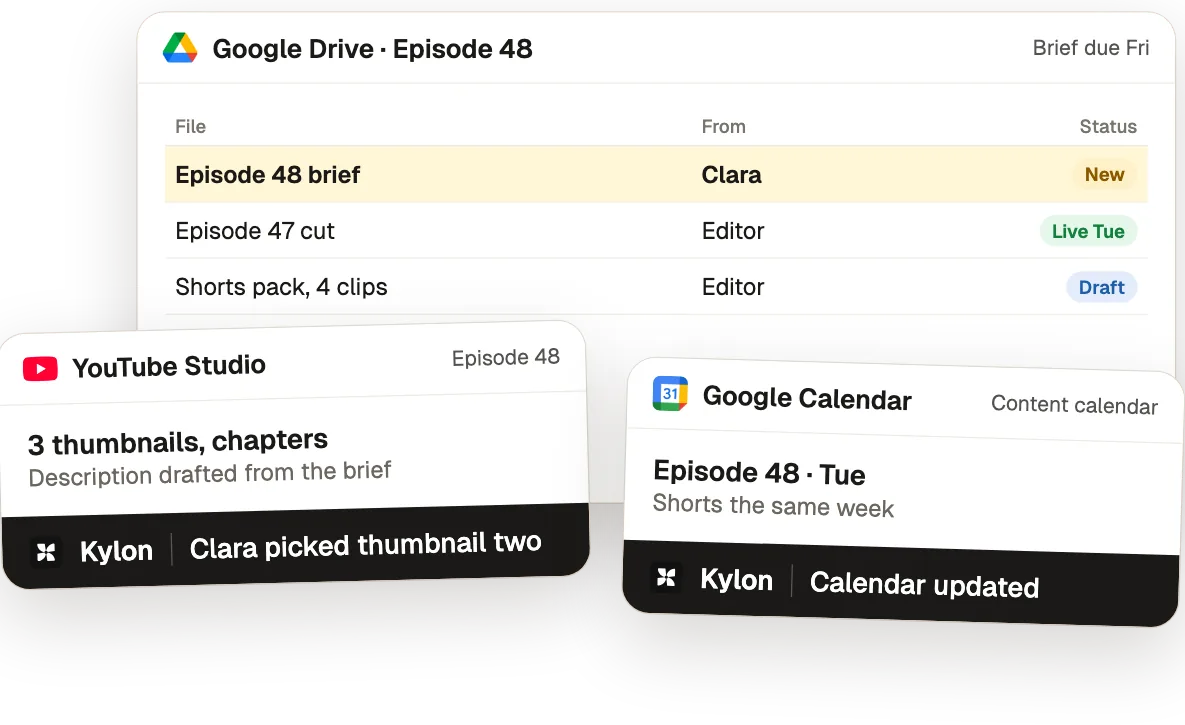
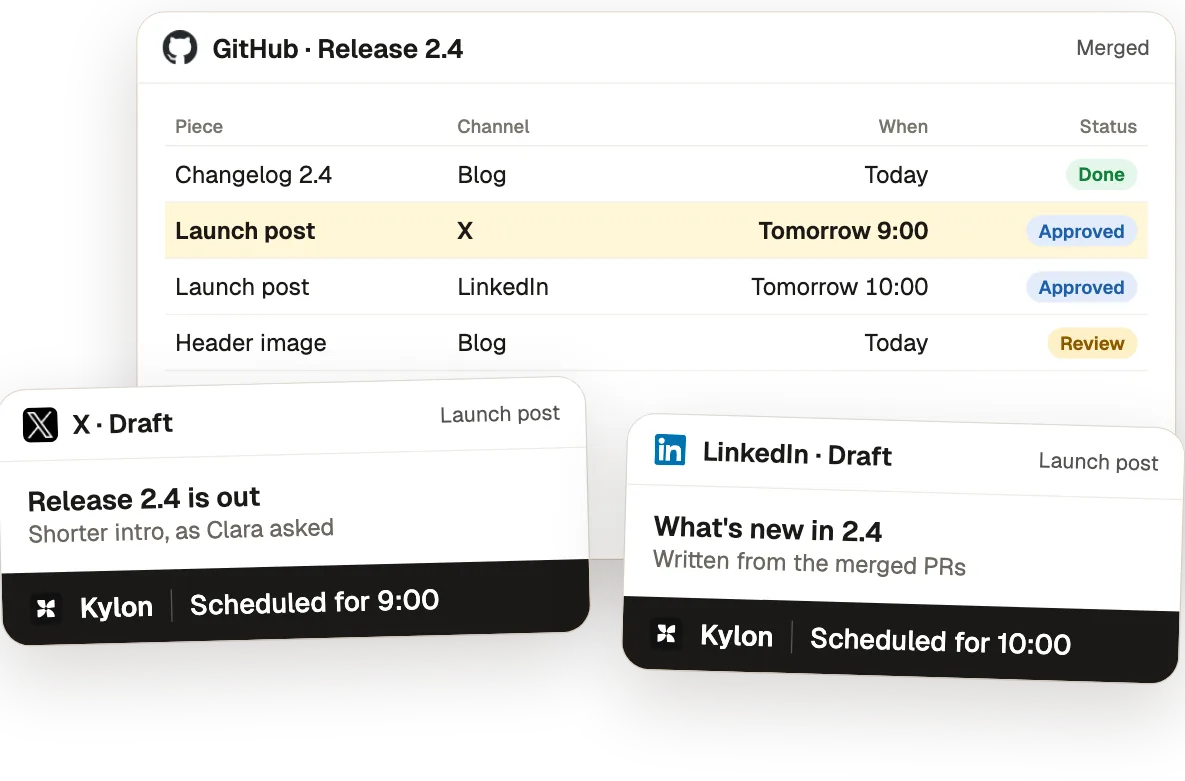
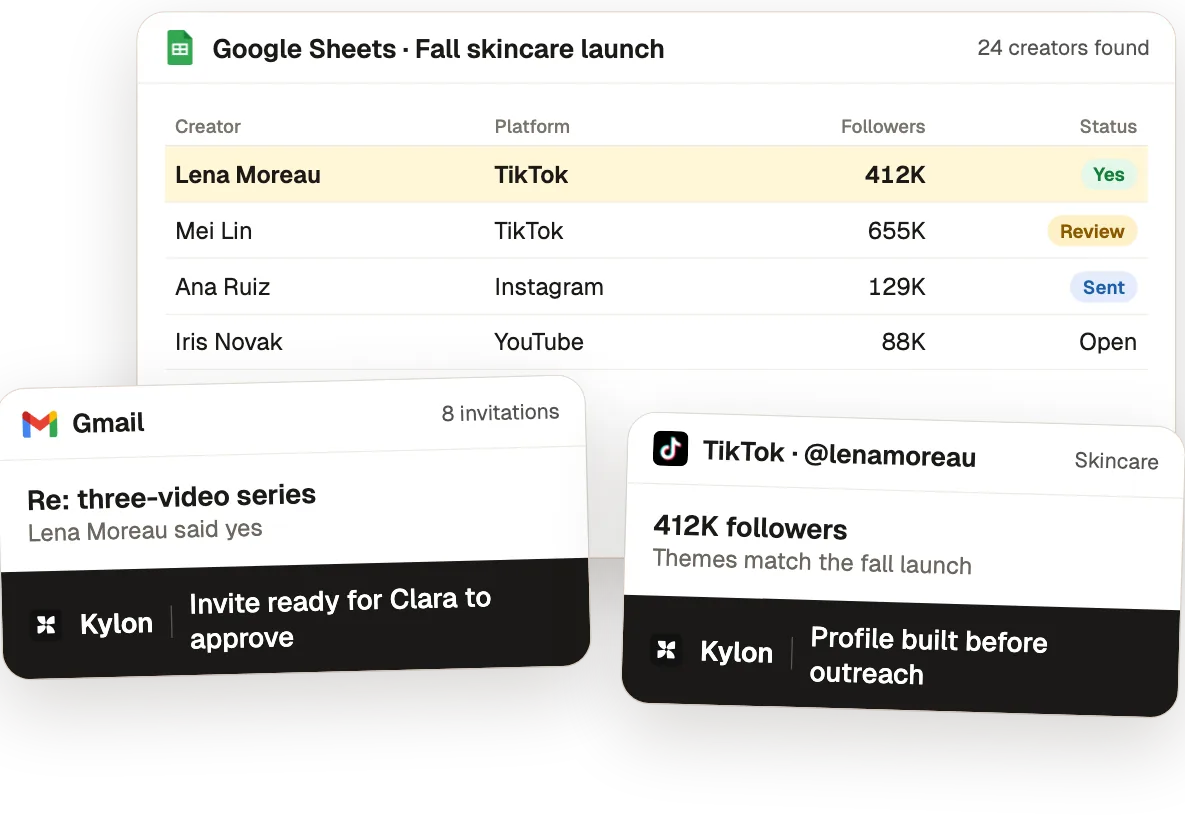
What the factory reads before it drafts anything
- The brief and the thread. The agent works from the conversation the team already had, not a form filled in again.
- Brand guidance. Voice, banned words and visual rules are a skill every agent reads, so the tenth piece follows the same rules as the first.
- Past decisions. When an owner settles a disagreement, the call is saved and the next piece starts from it.
- Your tools. Google Drive, Notion, Canva, Figma, YouTube, LinkedIn, X and the rest of your stack connect directly.
Where the finished pieces go
- Publish
- YouTube · LinkedIn · X · Instagram
- Files and docs
- Google Drive · Notion
- Design
- Canva · Figma
- Team
- Slack · Gmail
How it works
- 01
Brief. A request or a brief opens a record and a thread in the content Room.
- 02
Draft. The agent researches and drafts each format, and names what it read.
- 03
Review. Reviewers mark what to change in the thread. The owner settles disagreements once, and the call becomes a rule.
- 04
Approve and publish. Each piece waits as a draft until the person who owns it approves, then the calendar and the record update.
Questions people ask
- What is a content factory?
- A content factory is a repeatable system that turns briefs into published content: research, brief, draft, design, review, publish and report, with the same steps every time. An AI content factory puts agents on the routine steps and keeps people on the decisions.
- Does an AI content factory publish on its own?
- Not in Kylon. Drafts, thumbnails, posts, pages and emails wait until the person who owns them approves. The agent prepares and schedules; a person releases.
- How does it keep the brand consistent?
- Brand rules are written once as a skill that every agent reads. When reviewers disagree and the owner decides, the agent saves that decision too, so the same question does not come back on the next piece.
- Which kinds of content can run through it?
- Anything with a repeatable path from brief to published: videos, social posts, blog drafts, newsletters, release notes and creator campaigns. Each has its own use case page with the steps and a one-click set-up.
- Is this how Kylon makes its own content?
- Yes. Our videos, posts and website changes run this way: reviewers mark the work in a thread, the agent remakes it, and the website change waits as a draft until a person publishes it.
Ship content on a schedule, not on heroics.
Agents work every station of the line. The people who own the brand approve what goes out.