Travel Agencies: From Custom Trip Enquiry to a Priced Proposal the Same Day
Custom trips now arrive faster than an advisor can price them. This is how enquiry intake, supplier email and proposal drafting run in one Kylon room, with the advisor still setting the itinerary and the price.
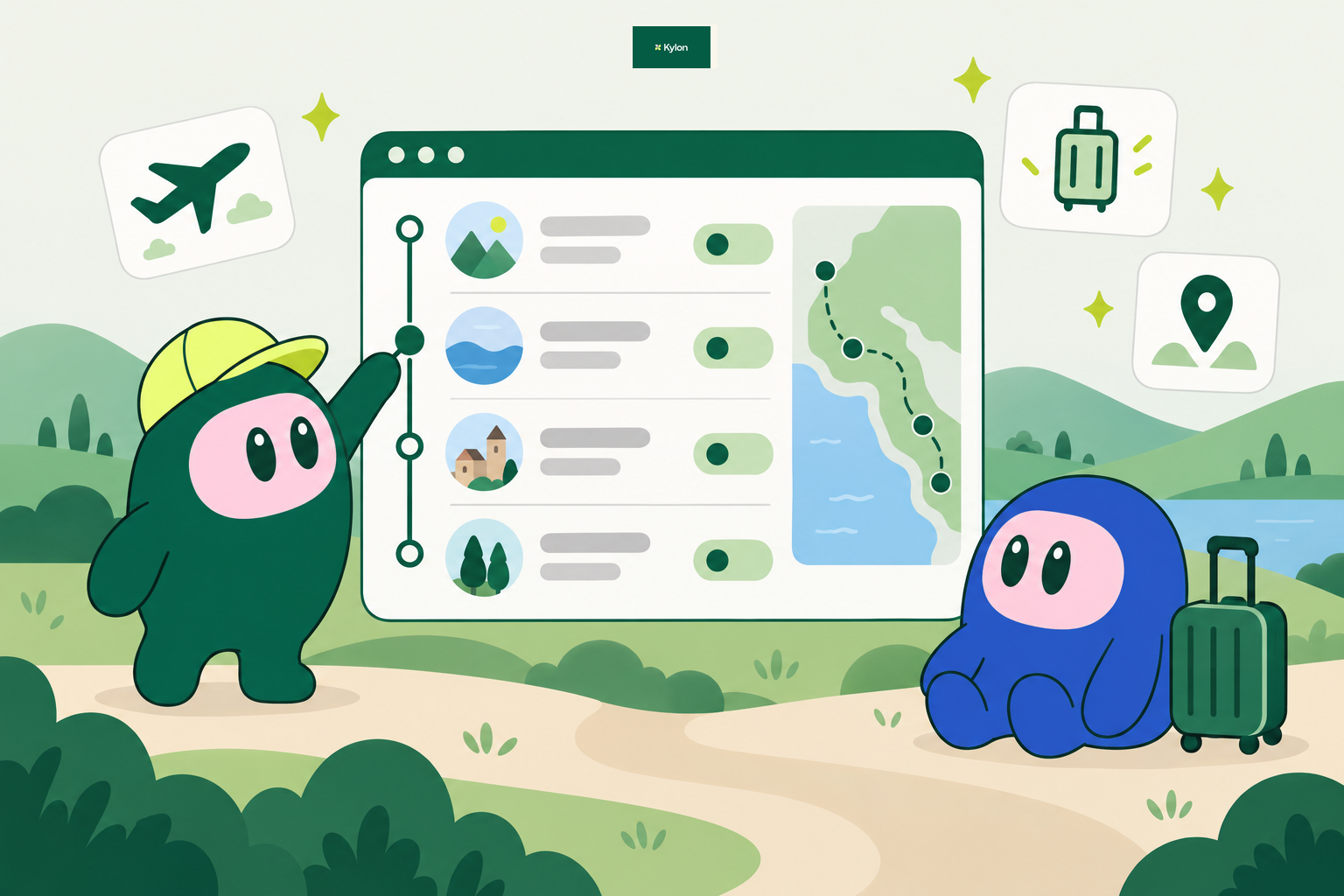
Custom is now the default, and custom does not scale by hand
The trips getting booked are bigger, more expensive and more specific than they were a year ago. WeTravel's 2026 report, built on aggregated booking activity covering 1.3 million travelers across 800,000 bookings and 350,000 trips, found average total trip prices up 59 percent year over year, and 56 percent of operators reporting increased interest in private or custom trips. Among travel advisors surveyed, 72 percent say custom or private trips are among their most requested offerings (WeTravel, Travel Trends Annual Report 2026, checked 21 September 2026).
Group size moved in the same direction. In that dataset, bookings through travel agencies and advisors went from an average of 2.6 travelers per booking in 2025 to 3.0 in 2026 (WeTravel, Travel Trends Annual Report 2026, checked 21 September 2026). More people on the booking means more preferences, more rooming permutations and more approvals before anyone pays.
The demand is not the problem. ASTA's own figures put travel agency sales at 26 percent of the total travel market by 2026, expected to reach 141.3 billion dollars, with 30 percent of advisors saying over half their clients are using an advisor for the first time (ASTA press kit, checked 21 September 2026). New clients ask more questions and need more written explanation. The constraint is the hours between the enquiry arriving and a priced itinerary landing in the client's inbox.
One room per trip, one record for the pipeline
The agency keeps a Kylon room for trip operations and a Database App behind it. Every enquiry becomes a record: party size, dates, budget band, destination, travel style, accessibility and dietary notes, the suppliers approached, what each one quoted, and where the proposal stands.
The point is not the tracker. It is that the record is written in a form the agent and the advisor both read, so a supplier reply updates the trip rather than sitting in one person's inbox until Monday.
- Trip records holding the brief, the party and the constraints in fields rather than prose
- Supplier quote lines against each trip, with what was asked and what came back
- Room guidelines that fix tone, what may be promised and what must be priced by a person
- One pipeline view covering enquiry, quoting, proposal sent, deposit and departure
What arrives, what gets prepared, who decides
The rule on this page is the same one on every Kylon page: an agent prepares, a person commits. In travel that line matters more than usual, because the commitments are contractual and the margins are thin.
| What arrives | What is prepared for you | What a person decides |
|---|---|---|
| A web enquiry with a paragraph of free text | A structured trip record with party, dates, budget band and the three things the brief does not say | Whether to take the enquiry, and the questions to ask back |
| The brief mentions a region you have run before | A first-draft shape of the trip, drawn from past trips in the record and current supplier notes | The actual itinerary, the pacing and the substitutions |
| Six suppliers need the same availability request | Six drafted emails with the correct dates, party and special requirements in each | Which suppliers to approach, and the send |
| Quotes come back over four days in four formats | One comparison against the trip record, with what each quote includes and what it leaves out | The selection and the margin |
| The client is ready for a proposal | A drafted proposal built from the selected quotes and the itinerary you approved | Every price and inclusion before it is sent |
| Ninety days before departure | A checklist position: deposits, passports, insurance, final rooming, outstanding balance | What to chase and what to escalate |
Supplier email, which is most of the job
A custom trip with three hotels, two transfers, a guide and a restaurant block is seven conversations that all have to hold the same dates and the same party. Retyping those details seven times is how a party of six becomes a party of five in a confirmation nobody reads until arrival.
In the room, the agent drafts each supplier request from the trip record, so the party, dates and requirements are the same in all seven. When a reply comes back, it reads the quote, writes the numbers onto the trip record, and flags what it could not read rather than inventing it. The advisor sees one comparison instead of seven threads.
None of that sends without an advisor. Supplier relationships are the asset here, and a wrong request costs more than a slow one.
See it in action
The advisor names the pairing in one line and the proposal comes back assembled from the quotes on the record, held until she sends it.
The proposal is the product, so the advisor writes the last version
A proposal that reads like a template loses to one that reads like someone listened. The agent assembles the structure, the confirmed inclusions and the prices from the record. The advisor writes the paragraph that explains why this hotel and not the cheaper one two streets away.
That division holds up in the survey data too. Among advisors, 66 percent say AI improves efficiency and creativity in their business, positioning it as support for their work rather than a replacement for the judgement clients pay for (WeTravel, Travel Trends Annual Report 2026, checked 21 September 2026).
After the deposit, the part that gets forgotten
Most agency software is good at the sale and thin after it. The window between deposit and departure is where the reputational damage happens: a passport that expires inside six months, a final rooming list nobody confirmed, a balance that goes unpaid until the supplier cancels.
Because each trip record carries its own dated checklist, the room raises those items on their own schedule and drafts the client message that goes with each one. The advisor decides what is sent and what needs a phone call, which for a family trip leaving in three weeks is usually the phone call.
What has to be connected
Kylon is not a booking engine, a GDS or a reservation system. It sits across the tools the agency already runs and holds the coordination between the enquiry, the suppliers and the client.
- Email, so supplier threads and client threads attach to the trip instead of a person
- A Database App as the trip and quote record the team and its agents both read
- File storage for quotes, vouchers and signed proposals
- Room guidelines setting what may be promised, and what has to be priced by a person
- Scoped permissions, so an agent works the trips it is assigned and nothing else
If most of your enquiries arrive as inbound email, the intake pattern is the same one in sales email as a managed pipeline. For the wider hospitality picture, see hospitality and travel use cases.
Where to start
Take one destination you sell often. Put its trip fields and its supplier list into a Database App, connect the mailbox the enquiries already arrive in, and write the one rule that matters: an agent may draft a supplier request and a proposal, and an advisor sends both.
“The advisor still designs the trip. What changed is that the seventh supplier email now says the same thing as the first.”
Your first company harness. Where humans and agents run your business together.
More Use Cases
View all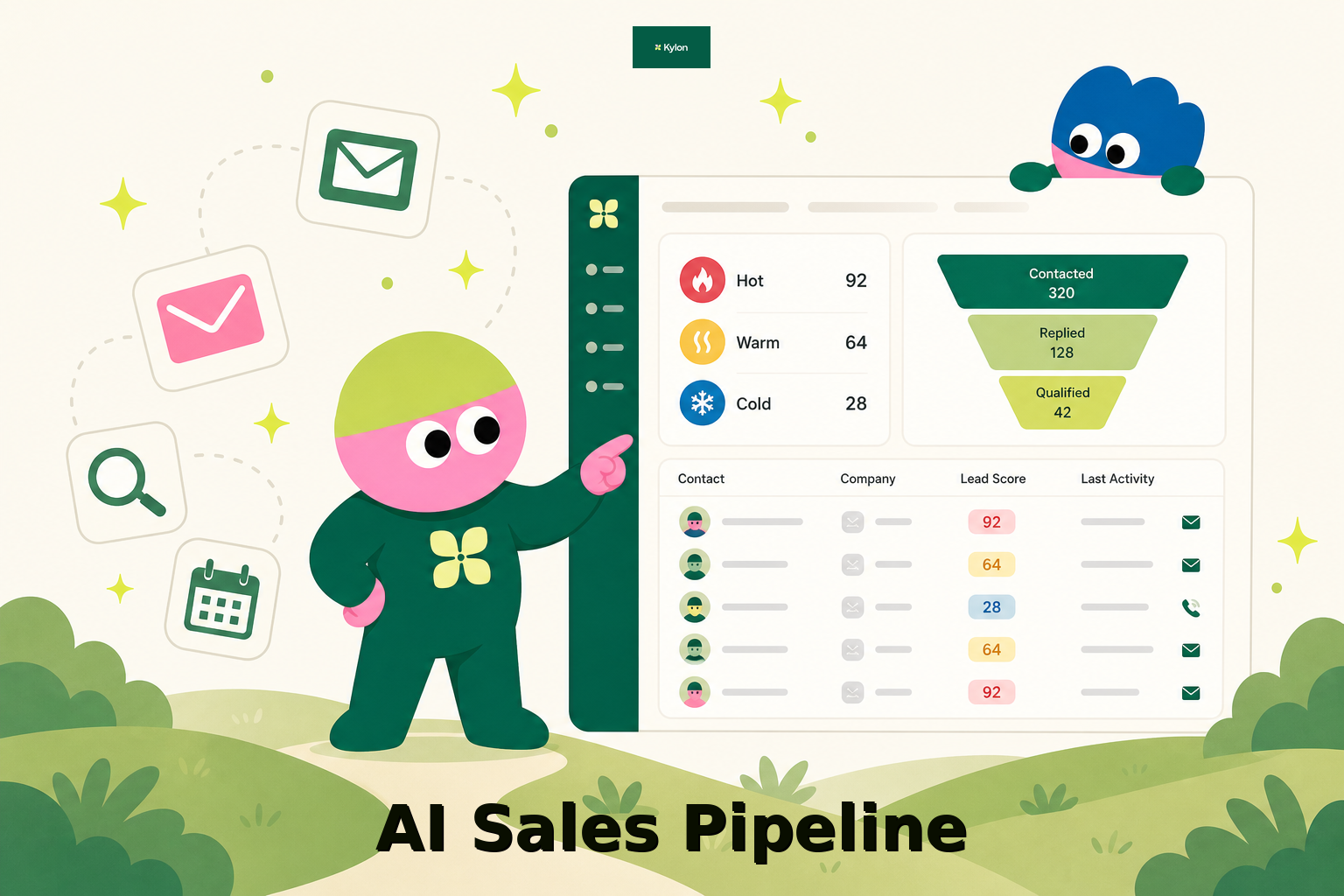
How a US Hospitality Firm Built an AI Sales Pipeline with Kylon
A US-based hospitality company used Kylon to automate 1,000-contact outreach, AI reply scoring, and lead routing.
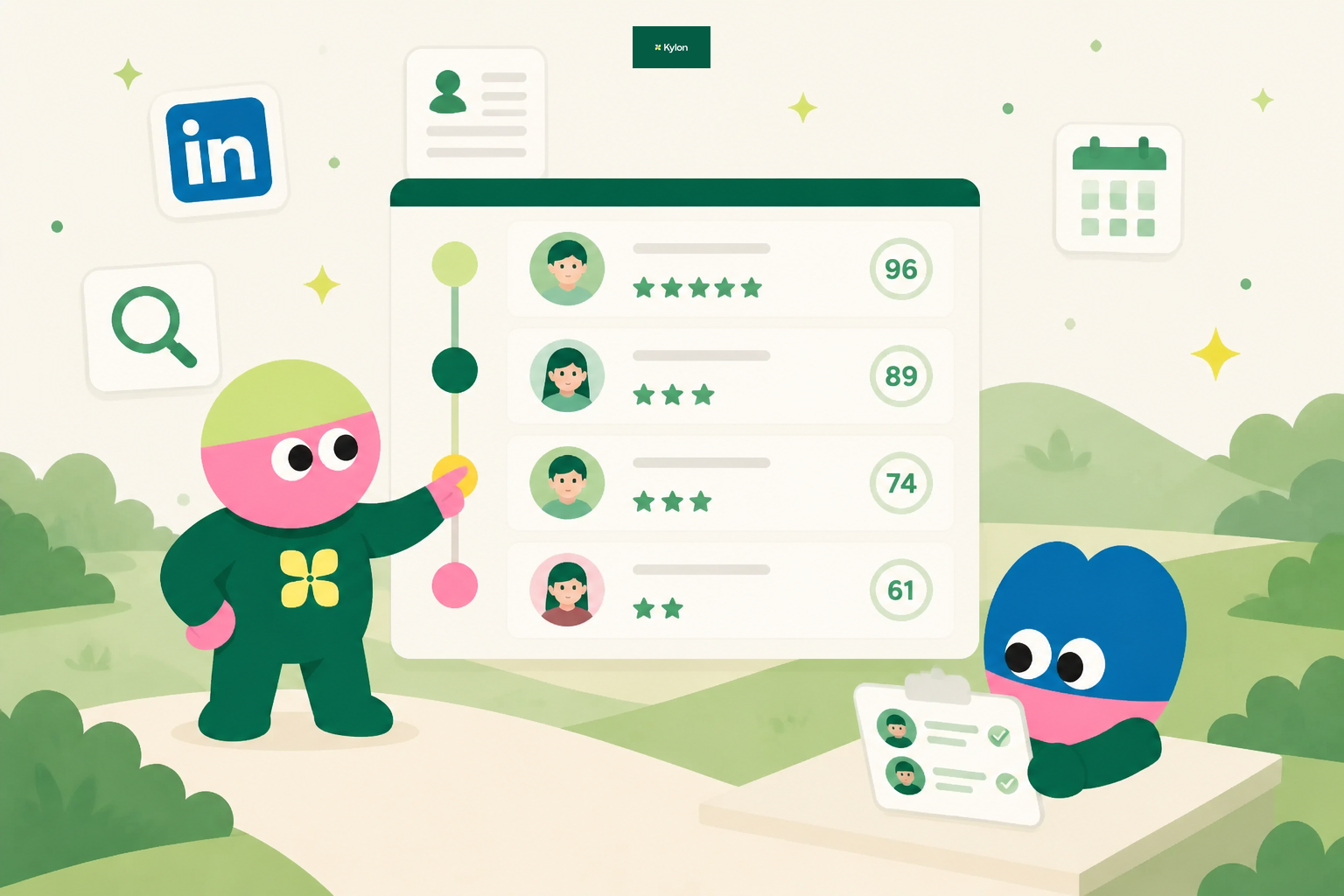
How an AI Startup Automated Talent Sourcing with Kylon
A growing AI startup built a recruiting system where agents parse resumes, score candidates against open roles, and manage outreach, all from one room with a structured database.