How an AI Startup Automated Talent Sourcing with Kylon
A growing AI startup built a recruiting system where agents parse resumes, score candidates against open roles, and manage outreach, all from one room with a structured database.
The Challenge
A fast-growing AI startup was hiring across engineering, research, and go-to-market. Resumes arrived from multiple sources: referrals, inbound applications, recruiter outreach. But candidate data lived in email threads, shared drives, and spreadsheets. No single view of the pipeline. No consistent scoring. Every new role meant rebuilding the same manual process.
One Room, One Database, Full Visibility
The team set up a single Kylon room for recruiting. Inside it, they built a Database App as their applicant tracking system. Every candidate became a structured record: name, contact info, resume, experience summary, skills, education, source, and status.
Job descriptions were also maintained in the same database. Each JD included role requirements, team, seniority level, and evaluation criteria. This gave the system a structured foundation to work from.
- Candidate records created automatically when resumes are uploaded
- JD records maintained with requirements, skills, and evaluation criteria
- Pipeline status visible to the entire hiring team in one place
Upload a Resume, Agent Does the Rest
When a recruiter uploaded a resume or forwarded a candidate email, the agent automatically parsed the document: extracting work history, education, skills, certifications, and career trajectory. The parsed data was written directly into the candidate record in the database.
Automatic Scoring Against Open Roles
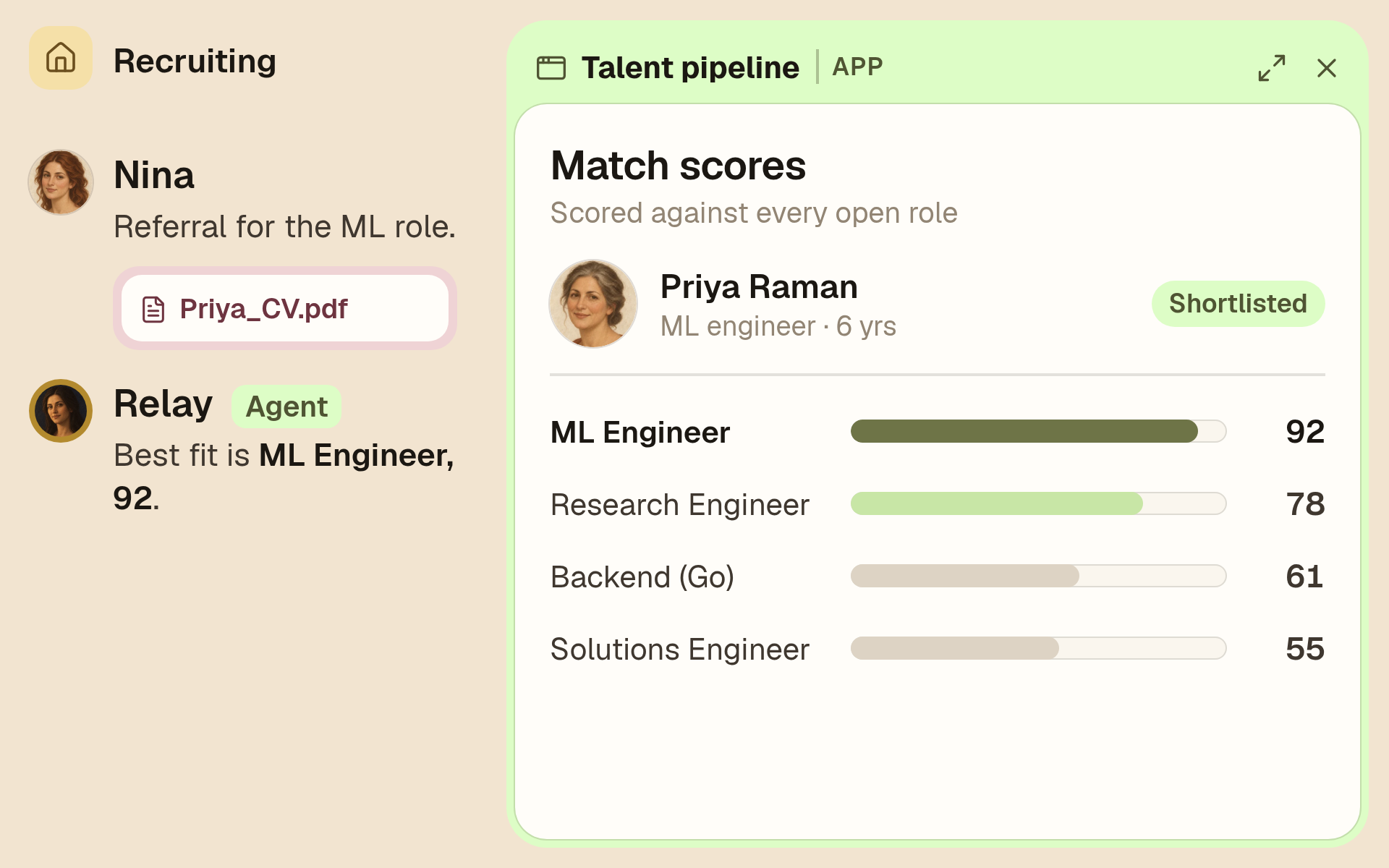
Every new candidate was scored against all active JDs in the database. The agent compared skills, experience level, industry background, and role requirements to produce a match score for each open position. Recruiters saw which roles a candidate fit best, without manual comparison.
- Resume parsing extracts structured data from PDFs and documents automatically
- Match scoring evaluates every candidate against every open JD
- Recruiters review ranked shortlists instead of reading every resume manually
See It in Action
The left panel shows agent updates and recruiter discussions. The right panel tracks every candidate's match scores, status, and next action in the ATS database.
Outreach and Scheduling Through Email
When a recruiter approved a candidate for outreach, the agent drafted a personalized email using the candidate's background and the role context. Emails were sent through the team's connected email account. Interview invitations, follow-ups, and rejection notices all flowed through the same system.
Calendar integration meant the agent could check interviewer availability and propose time slots. Confirmed interviews were written back to the candidate record. No copying between inbox, calendar, and tracker.
- Personalized outreach drafted by the agent, reviewed by the recruiter
- Interview scheduling with calendar integration
- All communication history attached to the candidate record
Reactivating Your Talent Pool
As the database grew, the system became more valuable. When a new role opened, the agent automatically scanned the existing talent pool for past candidates who matched. Instead of sourcing from scratch, the team received a shortlist of candidates already in the system who fit the new requirements.
The agent also identified candidates who had been in the pipeline for a while without activity. It suggested reactivation campaigns: a personalized email to check if they were still open to opportunities, an update about a new role that matched their background, or a simple check-in. All sent through the connected email account.
- Automatic candidate suggestions when new JDs are added to the database
- Reactivation campaigns for dormant candidates via email
- Talent pool grows over time instead of being rebuilt for each role
- No candidate falls through the cracks because the system proactively surfaces matches
Results
- 200+ candidates processed per role with automated parsing and scoring
- 80% of initial screening automated before recruiter review
- Time to first contact cut from days to hours
- One unified pipeline replaced scattered spreadsheets, email threads, and shared drives
What Makes This Work
This is not a chatbot answering questions about hiring. The agent lives in the same workspace as the recruiting team, reads the same guidelines, maintains the same database, and handles routine operations while recruiters focus on candidate experience and hiring decisions.
- Database App as a custom ATS with structured candidate and JD records
- Agent parsing turns unstructured resumes into structured, searchable data
- Match scoring connects every candidate to every open role automatically
- Email connection for outreach, scheduling, and follow-up
- Room collaboration keeps the whole team aligned on pipeline status
“We stopped losing candidates in email threads. Every resume that comes in gets parsed, scored, and matched to open roles before a recruiter even looks at it.”
Your first company harness. Where humans and agents run your business together.
More Use Cases
View all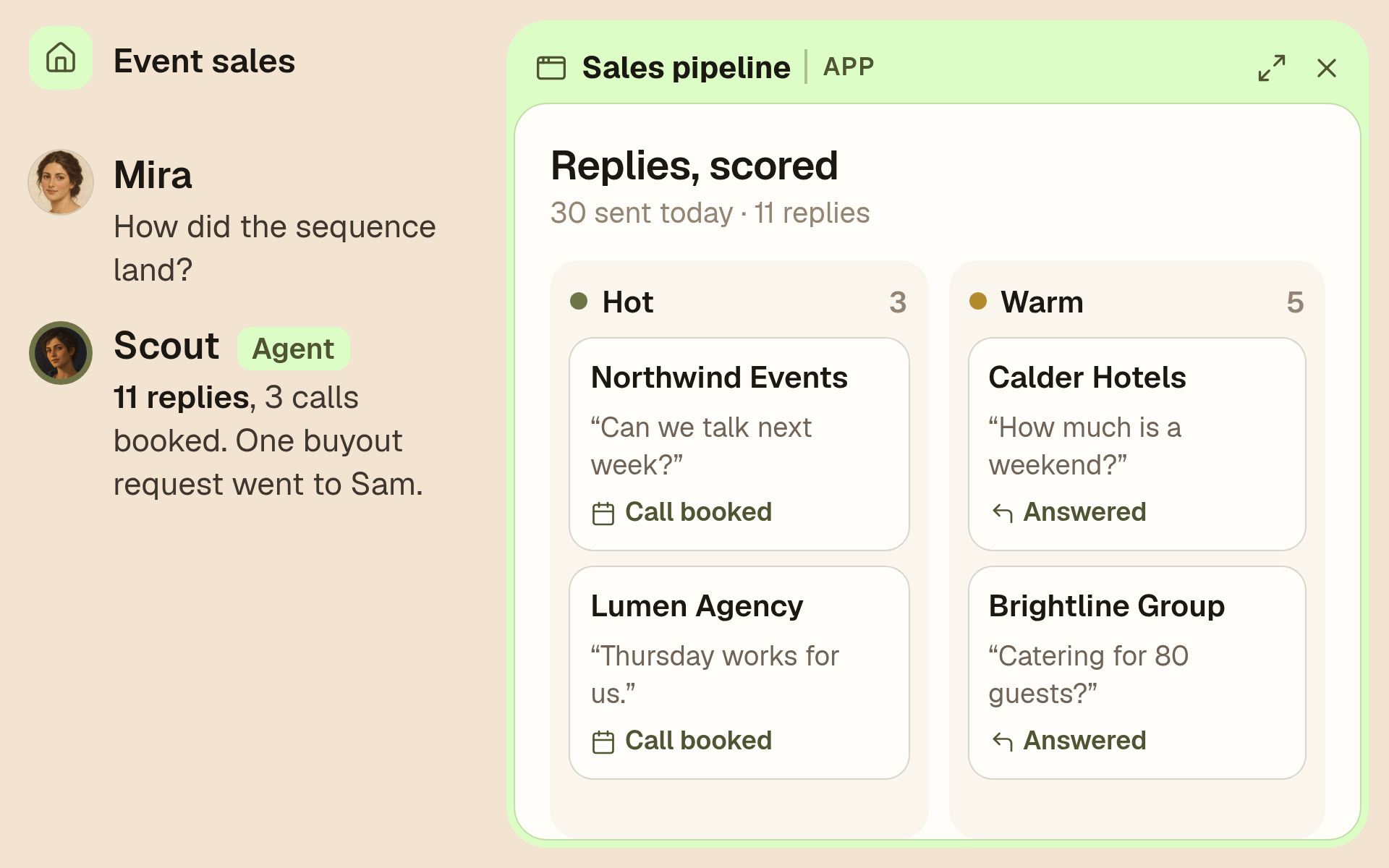
How a US Hospitality Firm Built an AI Sales Pipeline with Kylon
A US-based hospitality company used Kylon to automate 1,000-contact outreach, AI reply scoring, and lead routing.
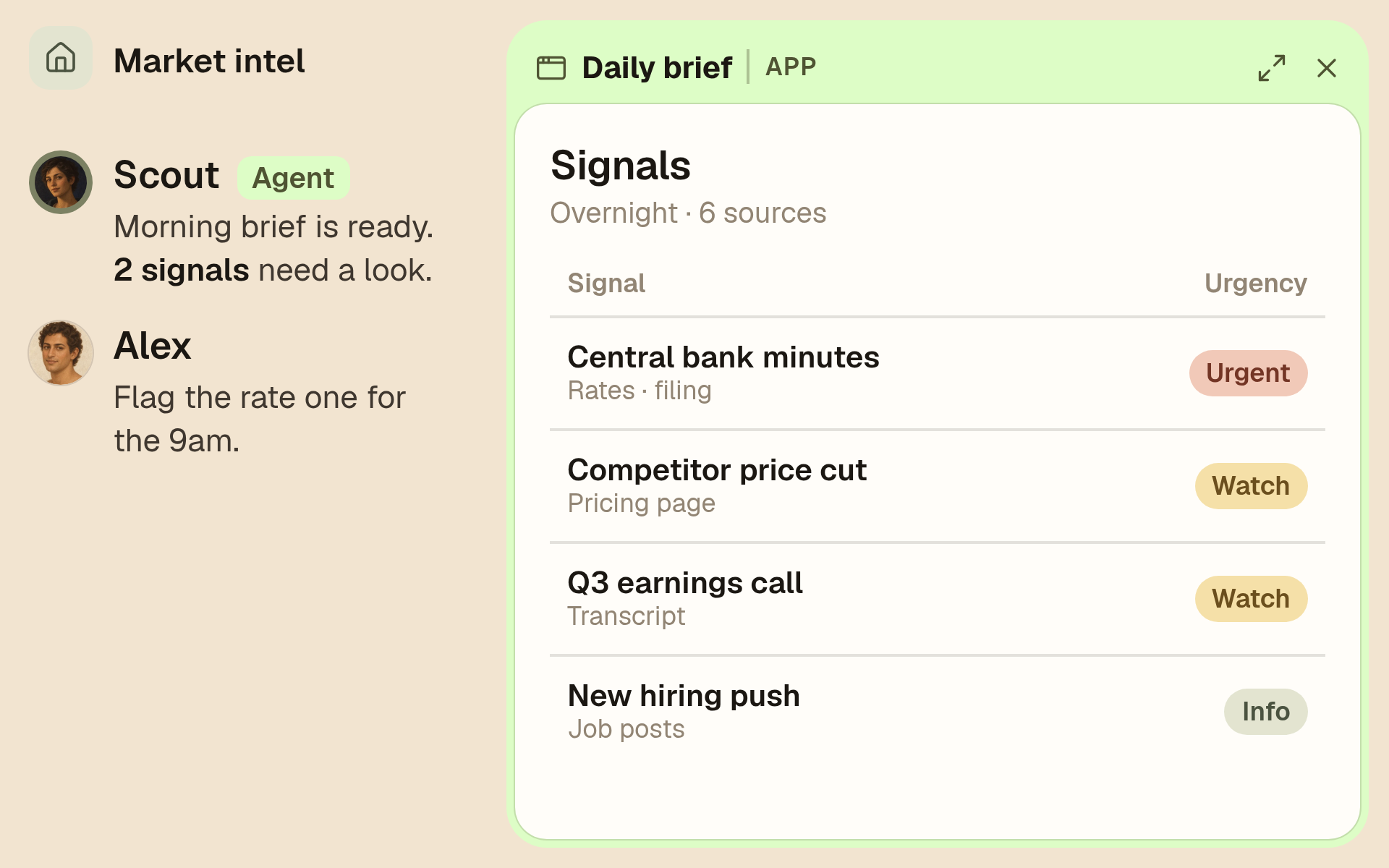
How a Fintech Team Built a 24/7 Market Intelligence System
A fintech team used Kylon agents to monitor market signals around the clock, compile daily intelligence, and turn research into a shared operating rhythm.