How a Team Ran Partner CRM and Co-Selling in One Workspace
A working system for partner contacts, shared opportunities, joint plans, documents, and human-reviewed communication.
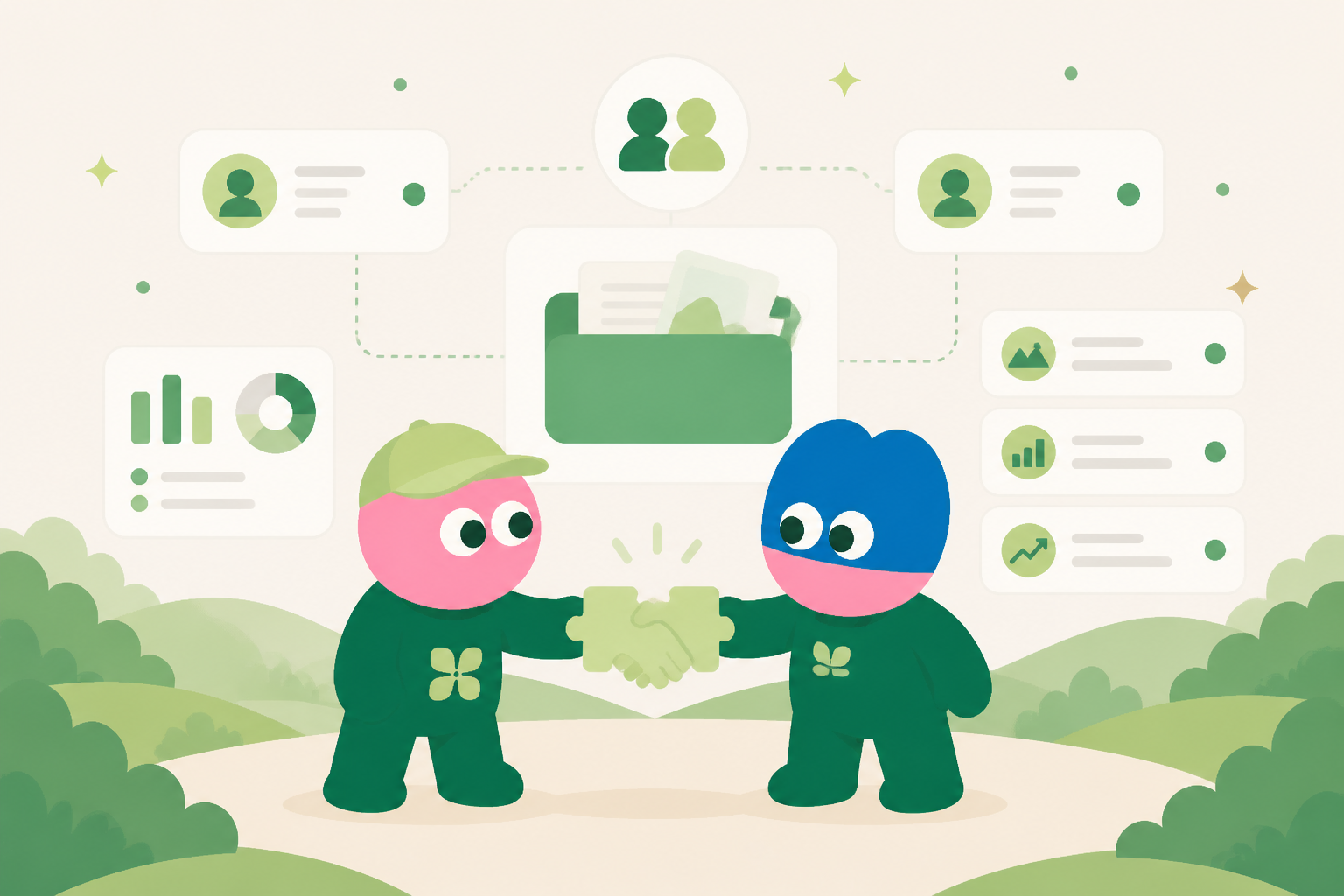
Give the relationship one home
A partner record holds the relationship owner, contacts, focus areas, shared accounts, meeting notes, documents, and the most recent communication. The team does not need to search several inboxes before every partner conversation.
Keep joint opportunities connected
Each co-sell opportunity can link the partner, account, stakeholder map, proposed value, shared materials, mutual actions, and open questions. People and agents work from the same current facts.
Prepare introductions with context
An agent can assemble a partner update or introduction request using prior emails, account notes, and the joint plan. The relationship owner reviews recipients and language before confirming an external message.
Build a shared co-sell view
The app can group opportunities by partner, stage, owner, or next action. It gives sales and partnership teams a usable operating view instead of another spreadsheet without conversation history.
Make relationship care routine
A workflow can prompt owners to refresh the account plan after a meeting, create follow-up work, and prepare a partner review brief with the linked evidence.
Coordinate partner work around a shared account picture
Co-selling becomes difficult when each partner maintains a different version of the account story. A referral may begin in a partner conversation, customer feedback may change the proposed use case, and the internal go-to-market team may be planning a launch at the same time. Kylon can hold the internal operating picture in a partner relationship record. A database app can capture the partner organization, relevant contacts, account opportunity, referral source, shared hypothesis, agreed responsibilities, materials requested, current stage, and next review. It is usable as an internal record and working application, not merely a static spreadsheet. Teams can link discussion, planning documents, customer feedback, and decision notes to the same record. This helps a partnership manager see where coordination is needed without exposing information that has not been approved for sharing. The record supports a deliberate process: establish context, agree on responsibility, prepare material, review the next action, and document what the teams learn.
Keep partner communications prepared, reviewed, and accountable
Partner communication needs careful ownership because it often represents more than one organization. Kylon can help prepare a draft using relevant connected email context and the current internal account record. For example, a team may prepare a recap of an agreed joint opportunity, request feedback on a proposed customer introduction, or assemble a concise list of materials for review. Before anything is sent outside the workspace, the designated relationship owner explicitly confirms the recipient, wording, commercial statements, permissions, and timing. Workflows can remind internal owners about reviews, collect requested input, and surface unresolved decisions. They should not be treated as an unattended partner outreach mechanism. Where a campaign requires sending at scale, professional outreach platforms remain responsible for bulk deliverability and campaign controls. Kylon maintains the internal account context so campaign activity and direct relationship work do not become disconnected.
- Start each co-selling record with the referral origin, shared account context, named internal owner, and a clear note about what information may be shared.
- Map responsibilities by task, such as customer discovery, product validation, proposal contribution, executive sponsorship, or post-meeting follow-up.
- Attach customer feedback and meeting insights as evidence, while distinguishing confirmed customer needs from an internal joint-selling hypothesis.
- Use review dates and internal reminders to prevent a request for input from disappearing after a planning meeting.
- Draft external partner messages from relevant connected context, then require the accountable owner’s explicit confirmation before sending.
- Review outcomes at the record level, including whether the next step occurred, what feedback was received, and what should change in the partnership playbook.
““We stopped treating a partner introduction as a loose message. The record showed the source of the opportunity, each owner’s responsibilities, and the point at which a human needed to approve the next communication.””
Turn partner feedback into a reusable co-selling playbook
What the team keeps in the internal system
The exact fields differ by workflow, but the system keeps the source context, current status, accountable owner, decision history, related documents, relevant email thread, next internal action, and review date together. That structure gives people and agents a reliable starting point whenever work changes hands.
Start with one repeated workflow
Teams do not need to replace every tool at once. Start with the repeated work that currently requires people to copy information between conversations, inboxes, documents, and spreadsheets. Build a shared record, connect the people who own it, and use a workflow to support the review rhythm. The system becomes more useful as its context and decisions accumulate.
See how Kylon can help your team turn recurring work into a shared operating system.
Talk to KylonYour first company harness. Where humans and agents run your business together.
More Use Cases
View all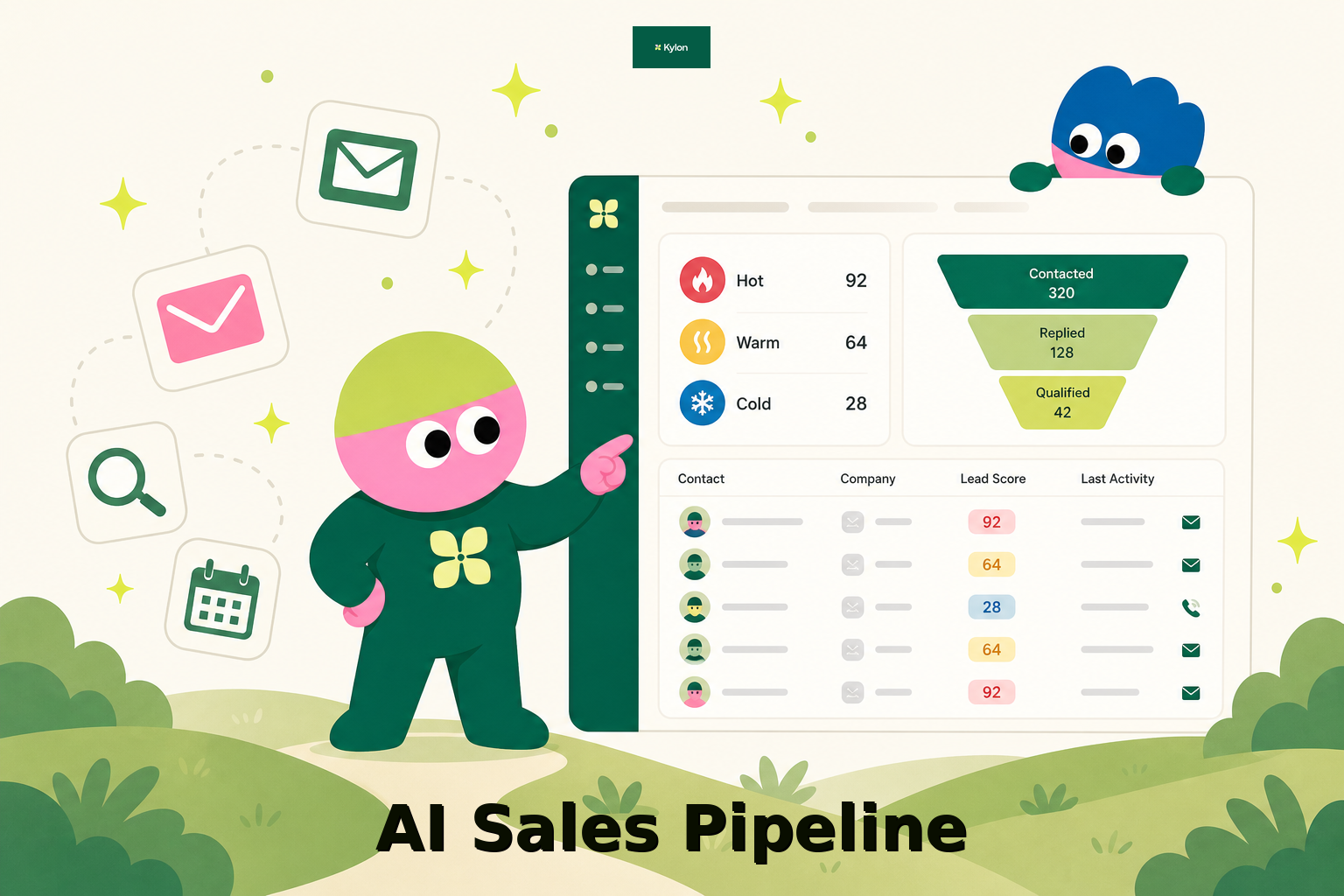
How a US Hospitality Firm Built an AI Sales Pipeline with Kylon
A US-based hospitality company used Kylon to automate 1,000-contact outreach, AI reply scoring, and lead routing.
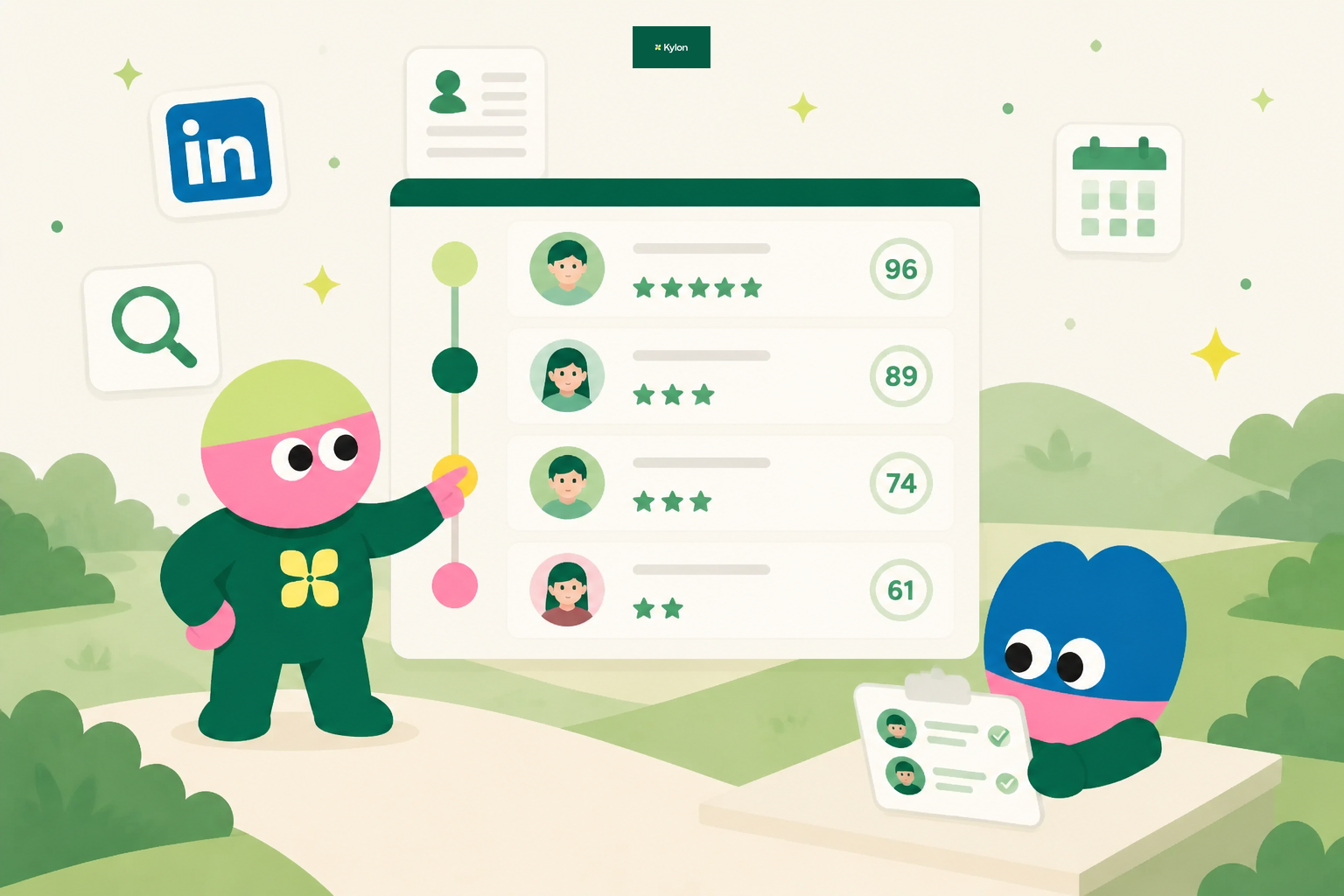
How an AI Startup Automated Talent Sourcing with Kylon
A growing AI startup built a recruiting system where agents parse resumes, score candidates against open roles, and manage outreach, all from one room with a structured database.