How a Team Ran an Operating Rhythm and Project War Room
Keep goals, updates, blockers, decisions, source documents, and externally reviewed communication in one active project system.
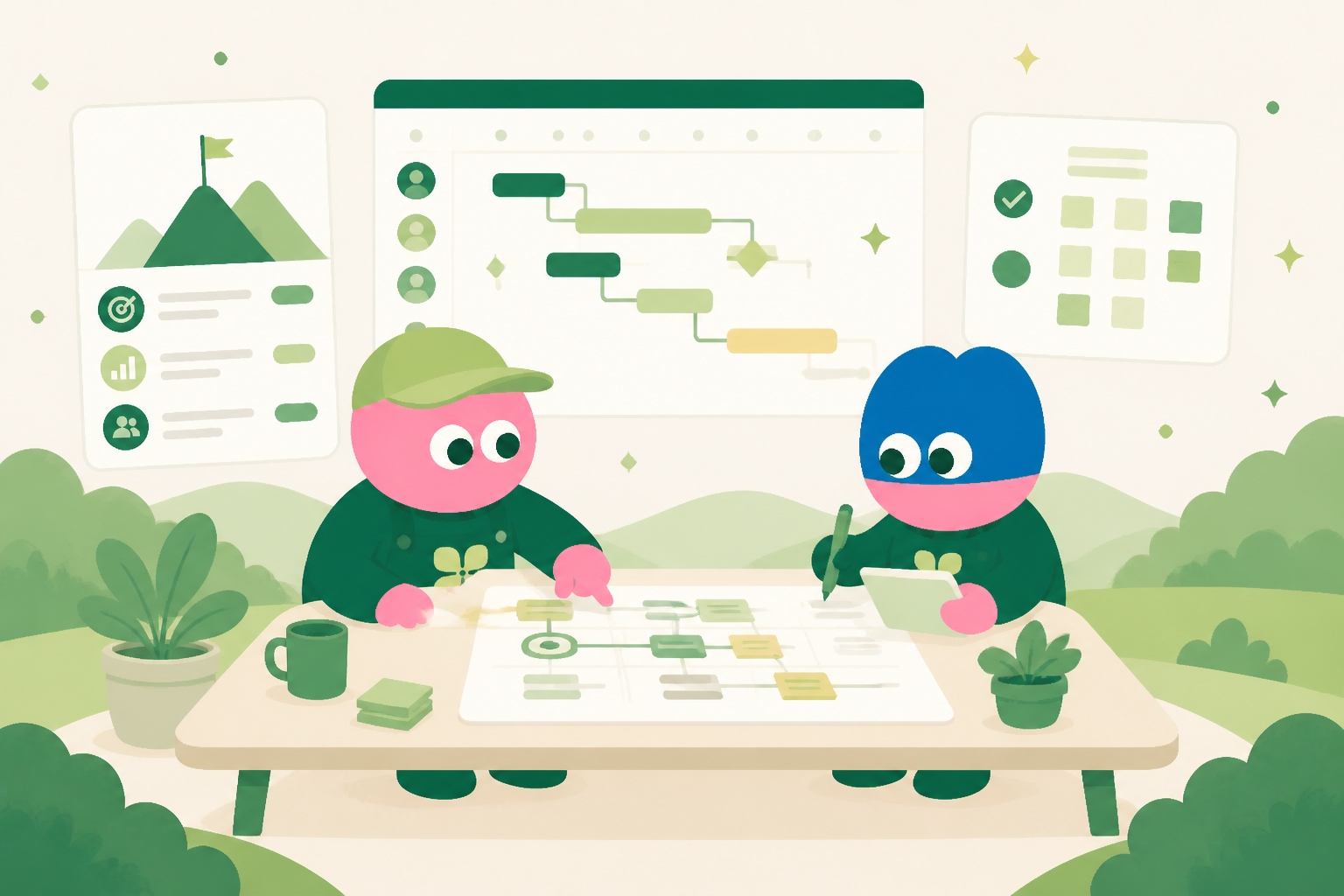
Status breaks when it lives everywhere
A launch or high-stakes initiative can involve campaign work, product readiness, customer feedback, supplier email, documents, and several owners. A war room gives the team one place to see what needs attention now.
Give each workstream a current record
The project app can show workstreams, owners, milestones, blockers, decisions, next actions, linked email, and documents. The shared context lets people and agents prepare updates without asking every owner to rebuild the background.
Keep blockers tied to evidence
A blocker record points to the conversation, document, customer input, or requirement that explains it. This makes operating reviews about current facts rather than forwarded fragments.
Make the weekly rhythm durable
A recurring workflow requests concise updates, surfaces unreviewed blockers, and prepares a brief for the next review. After the meeting, the same system records decisions and updates the work.
Coordinate external messages safely
For a partner request, launch update, or customer notice, an agent can prepare a draft from the approved project records. A designated person reviews and confirms it before sending.
Give launch planning a shared operating rhythm, not another status meeting
A launch plan can look complete in a planning document and still lose momentum once work begins. Product feedback changes the message, an implementation dependency shifts the date, a sales question exposes a missing enablement asset, and a customer commitment needs a clear answer. When each update lives in a different conversation, the team spends its time reconstructing the present instead of deciding what to do next. A Kylon project war room creates a working center for that period. It brings the launch brief, customer evidence, decisions, owners, risks, assets, and open questions into a shared rhythm. The goal is not constant activity or a larger stream of notifications. It is a place where the team can see what has changed since the last review, which decision needs attention, and whether the plan still matches what teams are learning from the market.
Run the work from a current view of commitments and evidence
For an upcoming release or market introduction, a team can begin with a clear record of the audience, problem, positioning, delivery scope, dates, accountable owners, and measures it plans to watch. Linked customer feedback gives the plan context. A note from a discovery conversation can be connected to a messaging decision, while a support pattern can be linked to a readiness task. This keeps launch planning grounded in observed needs rather than a collection of disconnected opinions. A database app can become the internal operating system for the war room. It can hold launch workstreams, decision records, risks, dependencies, content and enablement assets, review dates, and accountable people. Each record can link back to the discussion that created it. Different views make the same system practical for different roles: leadership can review decisions and risks, contributors can focus on their assigned work, and the project owner can see dependencies that could affect timing.
Use workflows to keep review and follow-through moving
The operating rhythm is what turns the room into a dependable practice. Workflows can collect status updates before a review, summarize changes for the designated participants, request review of a decision or asset, and remind owners when an action has not been updated. The team can use the meeting time to resolve trade-offs, validate the next milestone, and assign a clear follow-up instead of reading every status update aloud. Communication outside the room stays deliberate. Kylon can prepare a draft for a customer update, partner note, or internal announcement using the relevant launch record and linked discussion. It does not send that message by itself. A person reviews the draft, adjusts it for the audience, and explicitly confirms before any external email is sent. This is especially useful when launch timing or scope is still changing, because the accountable team member remains responsible for the final commitment.
- Create one launch brief with audience, problem, scope, message, timing, owners, and review dates.
- Link feedback and decisions to the work they inform so assumptions can be checked in context.
- Use an internal database app for workstreams, risks, dependencies, assets, decisions, and accountable owners.
- Set workflows to collect updates, request reviews, and remind owners before critical handoffs.
- Prepare external updates from the current record, with a human review and explicit confirmation before email is sent.
“In an anonymized launch-planning pattern, sales, product, and customer teams were each tracking readiness in separate places. A shared war room revealed that the immediate issue was not the target date but an unanswered question about implementation expectations. The team assigned an owner, connected the answer to the customer-facing materials, and reviewed the updated commitment before it was communicated externally.”
What the team keeps in the internal system
The exact fields differ by workflow, but the system keeps the source context, current status, accountable owner, decision history, related documents, relevant email thread, next internal action, and review date together. That structure gives people and agents a reliable starting point whenever work changes hands.
Start with one repeated workflow
Teams do not need to replace every tool at once. Start with the repeated work that currently requires people to copy information between conversations, inboxes, documents, and spreadsheets. Build a shared record, connect the people who own it, and use a workflow to support the review rhythm. The system becomes more useful as its context and decisions accumulate.
See how Kylon can help your team turn recurring work into a shared operating system.
Talk to KylonYour first company harness. Where humans and agents run your business together.
More Use Cases
View all
How a US Hospitality Firm Built an AI Sales Pipeline with Kylon
A US-based hospitality company used Kylon to automate 1,000-contact outreach, AI reply scoring, and lead routing.
How an AI Startup Automated Talent Sourcing with Kylon
A growing AI startup built a recruiting system where agents parse resumes, score candidates against open roles, and manage outreach, all from one room with a structured database.