Kylon vs Gumloop
Gumloop alternative for teams that need the work finished.
Gumloop is a builder: you configure an agent, then chat with it. Kylon puts the agent in the room where the work is already discussed, on the records the work runs on, with the review step in the same thread as the request.
Choose Gumloop if
Someone on your team owns automation and wants a deep builder: subagents, skills, evaluations, and approval rules written per tool.
Choose Kylon if
The person with the problem should be able to ask for the work themselves, and see the result and the approval in the room they already use.
01 One real case
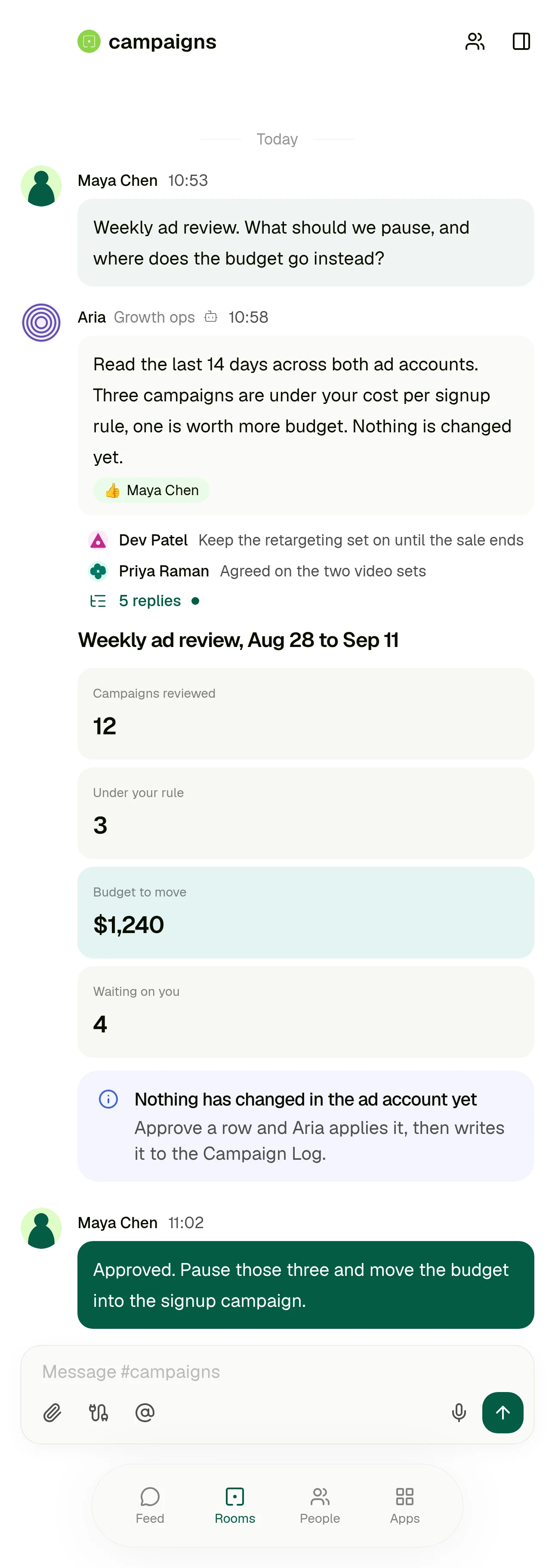
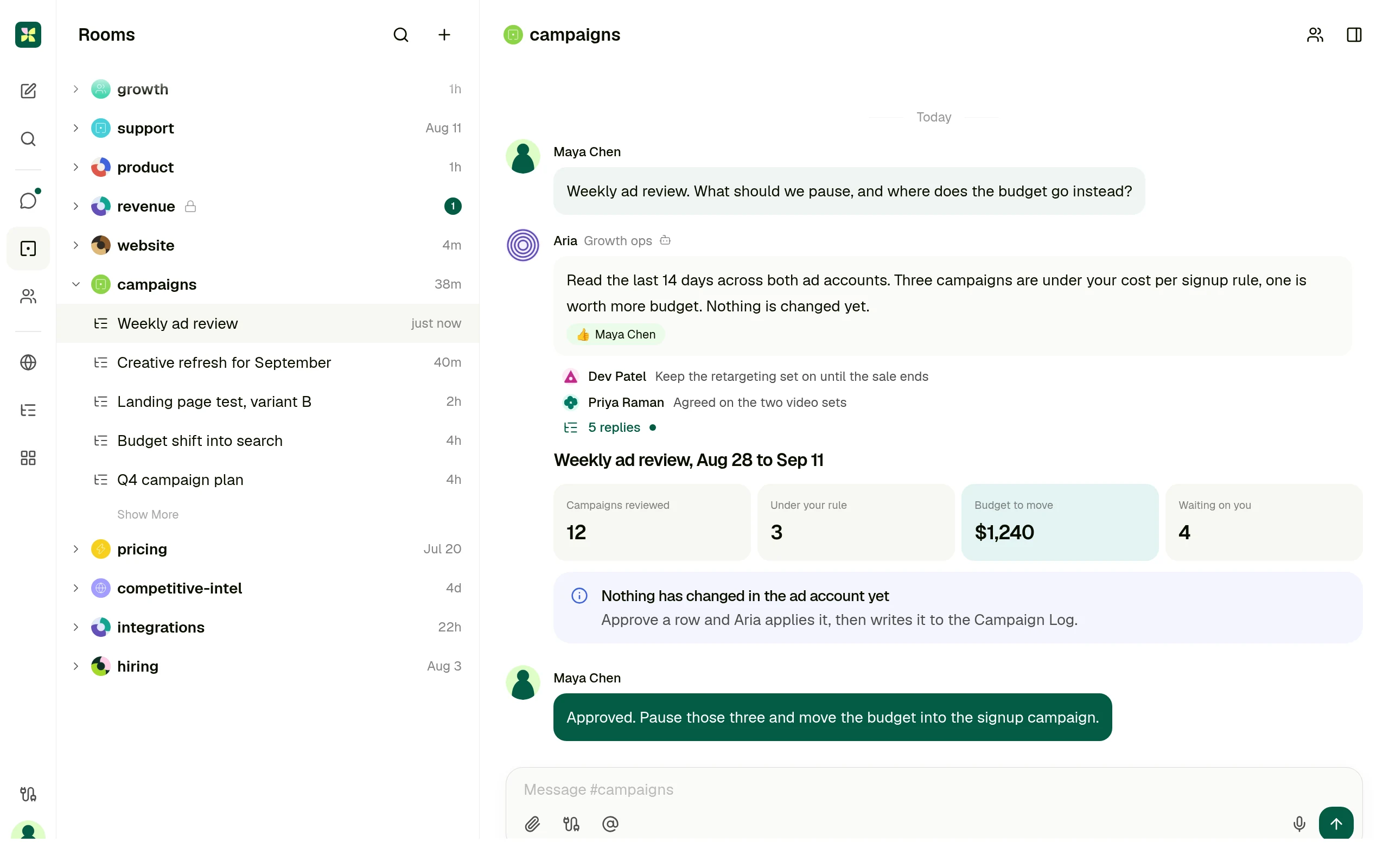
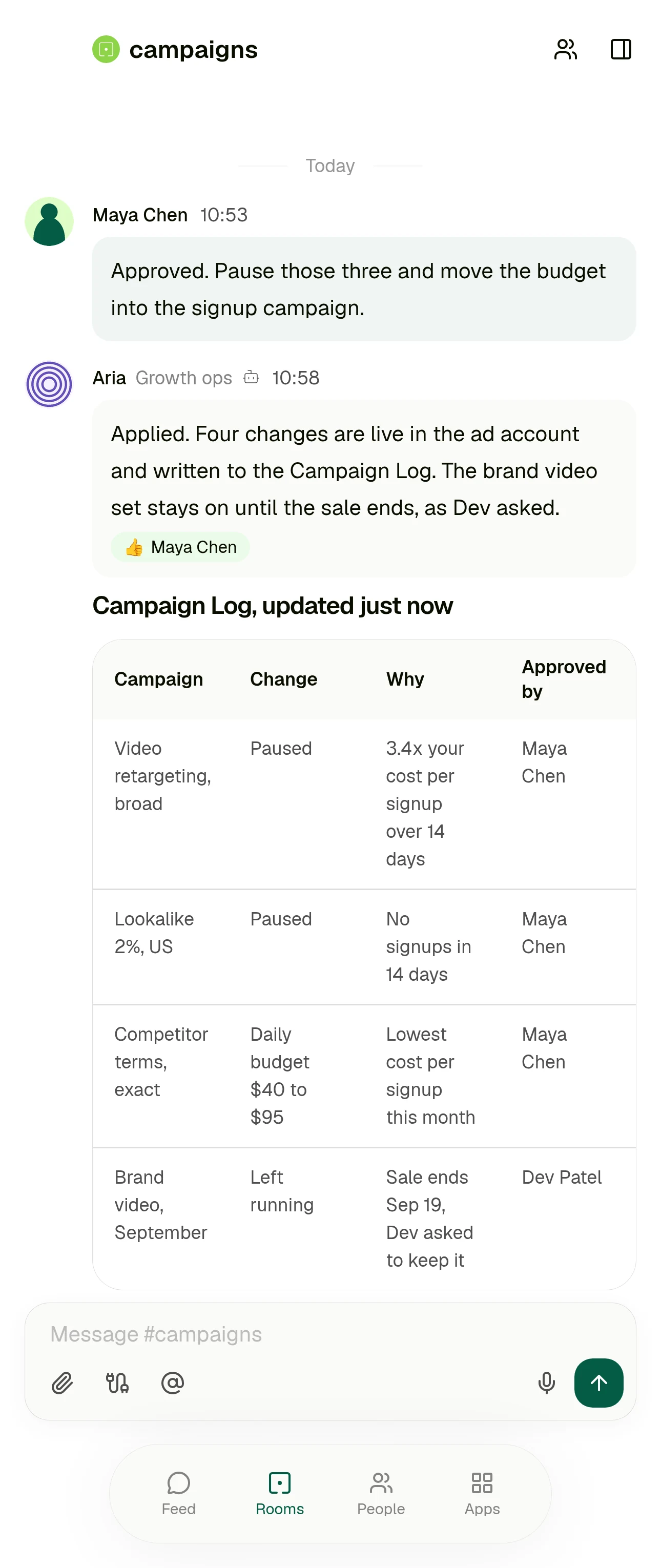
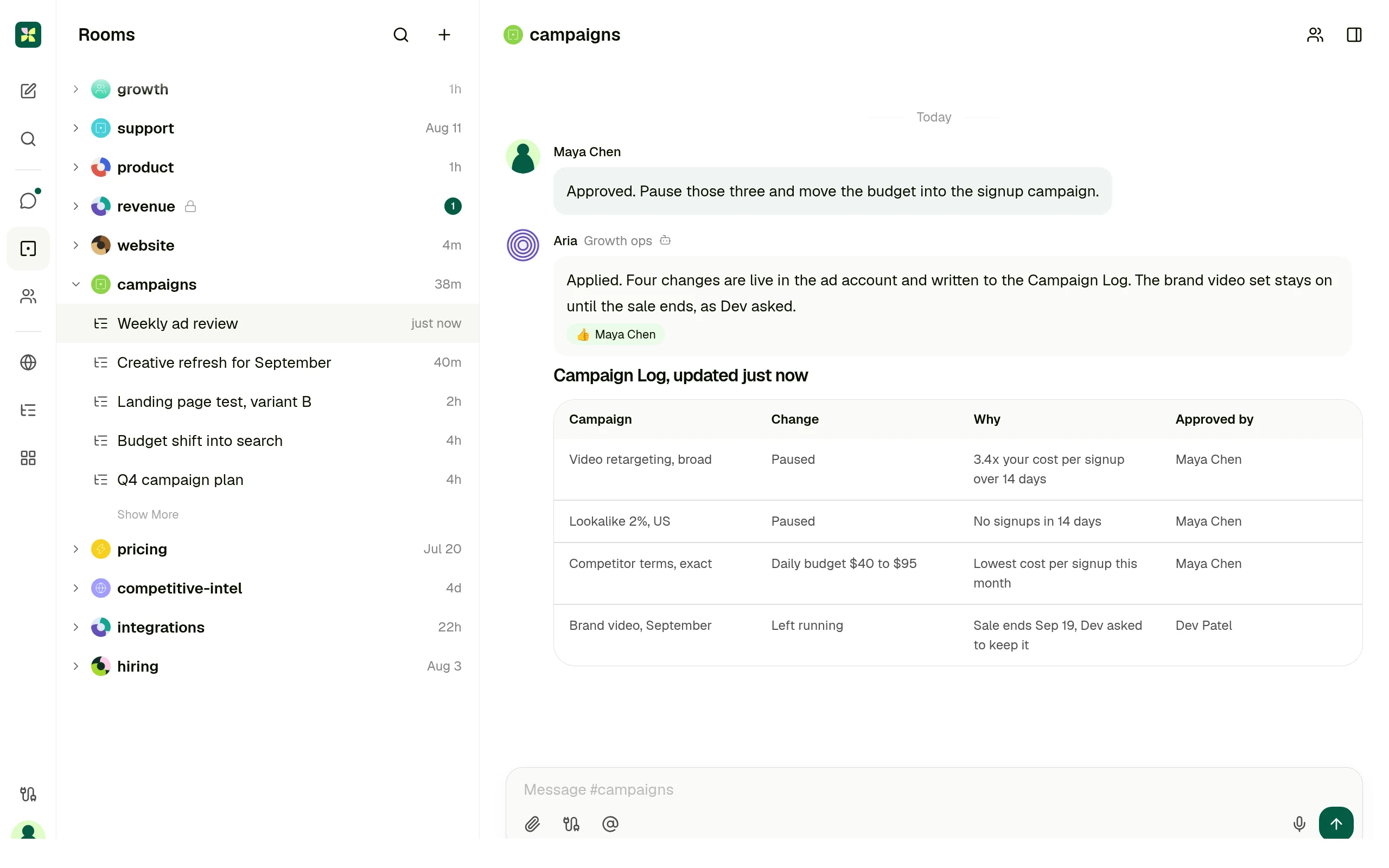
The weekly ad review, in a builder and in a room
Same piece of work, same team. The difference is not how clever the agent is, it is who has to be involved and where the finished result ends up.
Gumloop behaviour above is described from Gumloop's own documentation: Agents, Brain, and Human in the Loop. Checked 11 September 2026.
02 Who each product is for
Not every team should pick the same one.
Gumloop is the right answer when
Someone owns automation as a job. They want a deep builder with subagents, skills and evaluations, and approval rules written as expressions over the actual arguments of a tool call.
Gumloop is also stronger when
You want a published per credit price you can reconcile line by line, and unlimited seats while only one or two people ever open the builder.
Kylon is the right answer when
The people who need the work done are not the people who would build the agent. The request starts as a message in a team room, and the answer has to land there too.
Kylon is also the answer when
The output has to be a record the team can act on, and the person who signs off should see it next to the request rather than in a separate queue.
03 Operating model
Six decision dimensions
Operating models, not a checklist. Every statement about Gumloop cites Gumloop's own documentation or pricing page. Checked 11 September 2026.
04 Use cases
Four cases, written the way people ask for them
Each one starts as a message in a room. What comes back is a result someone can act on, plus the approval step in the same place.
Campaign review
Which campaigns are under our cost per signup rule, and where should the budget go instead?
A decision card in the room and one row per change in the Campaign Log, applied only after someone approves it.
Customer feedback into product work
Anything in support this week that should become an issue?
Grouped themes in the thread, and issues created with the original quotes attached to each one.
CRM follow up
Who from last week's demos has not heard back from us?
A list with an owner per account, and a draft reply waiting for that owner to read and send.
Weekly operating report
Put Monday's numbers together with what changed and why.
One post in the room with the figures and where each came from, kept as a workflow that repeats.
05 Switching
Switch without rebuilding anything
Nothing has to move on day one. The flows that already run are not the part that hurts.
- 01
Keep your Gumloop agents running
Fixed, well understood automation can stay exactly where it is. Nothing is imported and nothing is rewritten.
- 02
Connect the tools, not the flows
Point Kylon at the same services your team already uses, and set what each agent is allowed to reach.
- 03
Bring one case into a room
Pick the work that changes case by case, the kind that makes you reconfigure a builder every time. Ask for it in the room and review what comes back.
- 04
Keep it if it should repeat
Once the shape settles, save it as a workflow that runs on a schedule and posts into the same room.
Where Gumloop is the better tool
Gumloop's approval model goes further than ours: rules written as expressions over the actual arguments of a tool call, per tool allow and deny, and a published credit price you can reconcile line by line. If your security team wants that level of control written down before an agent touches a system, Gumloop is a real answer today. Kylon trades that depth for agents that live where the team already talks.
Questions people ask
- Is Kylon a replacement for Gumloop?
- Not if you have someone whose job is building automations and who wants a deep builder to do it in. Kylon is the answer when the person with the problem should be able to ask for the work themselves, in the room where the work is already discussed.
- Do we have to rebuild our Gumloop flows?
- No. Start with one recurring piece of work, ask for it in a room, and keep it as a saved workflow if it should repeat. Nothing has to move on day one.
- Does anything get sent automatically?
- Email is drafted for a person to send, and sensitive actions wait for approval before they execute.
Keep reading
The person with the problem should be able to ask for the work.
Start with one workflow. Ask for it in the room where the work is already discussed, give the agent the records and tools it needs, and review what it hands back before anything ships.