Accounting Firms: Turning Client Follow-Up Back Into Billable Capacity
Document chasing, status tracking and re-keying between systems is where an accounting firm's week goes. This is how that coordination layer runs inside one Kylon room, with every client-facing action waiting on a person.
The work nobody bills for
Ask a partner where the week went and the answer is rarely the return itself. It is the eleventh email asking for a bank statement, the client who sent last year's file, the spreadsheet somebody keeps updating to show who is waiting on what.
That layer has been measured. Progress Software surveyed 355 professional services firms across ten industries including accounting, and found firms spend close to 20 hours a week collecting documents and signatures, following up with clients, clarifying requests and tracking tasks. At an average billing rate of 65 dollars an hour, that is a median of roughly 60,000 dollars a year in non-billable client-service work (Progress Software, State of Client Collaboration 2026, published 30 July 2026, checked 21 September 2026). The vendor's own breakdown of the same dataset puts the figure at 20.3 hours a week and notes that 83 percent of firms say growth has increased operational strain (ShareFile, What's Wrong With the Way Client Work Happens Today, checked 21 September 2026).
The second leak is between the tools. Intuit's 2026 Accountant Technology Survey of 725 US accounting and bookkeeping professionals found firms run an average of 10 applications, and that accountants lose about 5 hours a week moving, re-entering or reconciling information across them. Asked what blocks more advisory work, 30 percent named manual data cleanup, ahead of staffing shortages at 24 percent and app overload at 16 percent (Intuit 2026 Accountant Technology Survey, published 23 June 2026, checked 21 September 2026).
Hiring your way out of it is slow and contested. Public accounting firms responding to the AICPA reported hiring 11,985 new graduates in 2024, and three quarters of those that hired expected the same or more the following year (AICPA, 27 October 2025, checked 21 September 2026). Everyone is recruiting from the same pool for the same reason.
One room per engagement, one database for the firm
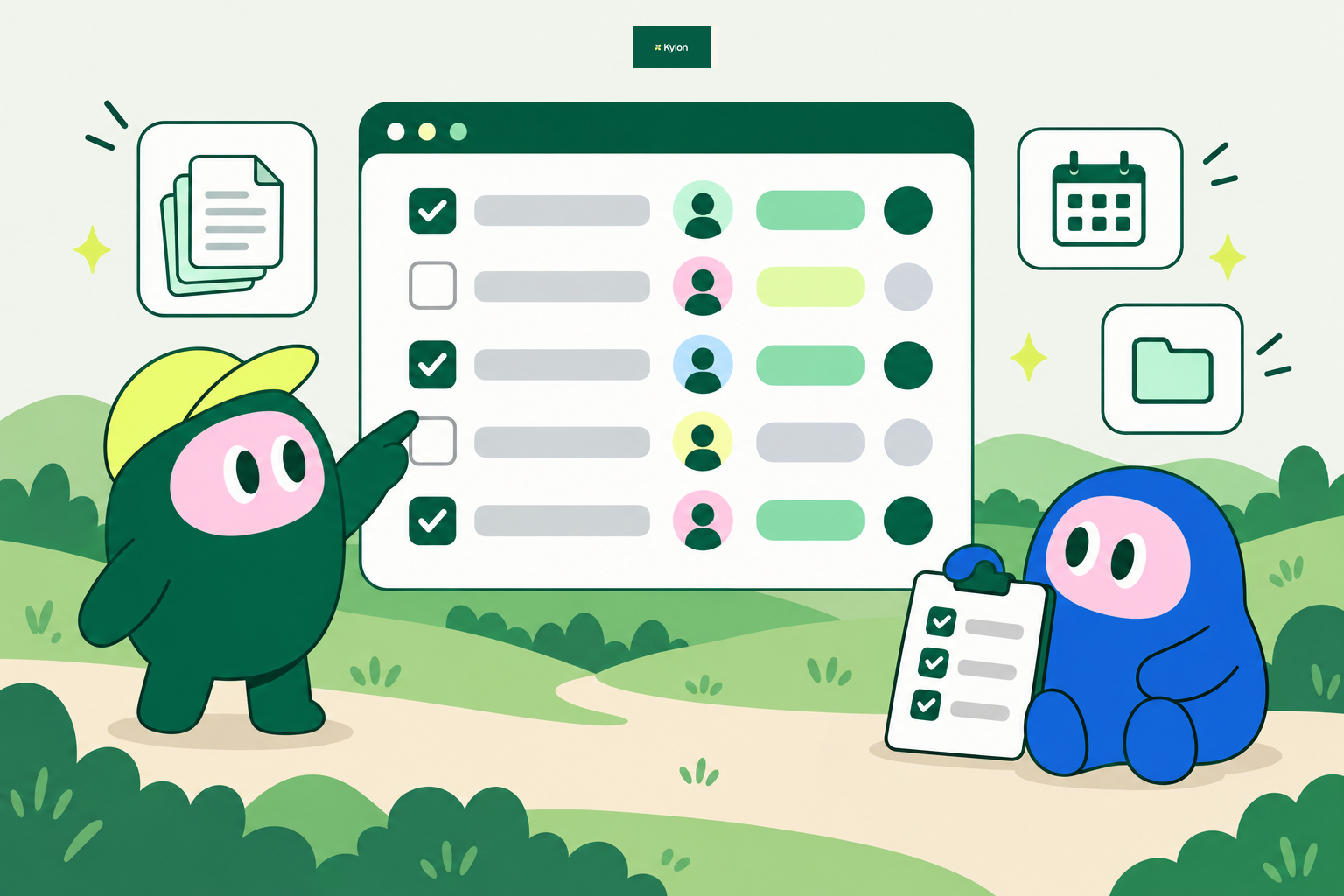
The setup is deliberately small. The firm keeps one Kylon room for client operations and one Database App behind it. Every engagement is a record: client, entity type, period, service line, owner, deadline, the document checklist for that service, and the current state of each item on it.
Nothing about that is novel on its own. What changes is that the agent working the engagement reads the same record the partner reads, and writes to it. There is no second copy of the truth in somebody's inbox.
- Engagement records carrying the checklist, the owner and the filing date
- Document state per item, so waiting is a field rather than a memory
- Room guidelines that set tone, escalation thresholds and what a person must sign
- A shared view the whole team reads instead of a status meeting
What arrives, what gets prepared, who decides
The useful question is not what the agent can do. It is where the work stops and a person picks it up. That line is fixed in the room guidelines and it does not move on a busy Tuesday.
| What arrives | What is prepared for you | What a person decides |
|---|---|---|
| A client emails three PDFs with no subject line | Filed against the right engagement and checklist item, with a note on what is still outstanding | Whether the document actually satisfies the item |
| A checklist item is five days past its reminder date | A follow-up email drafted in the firm's voice, naming exactly the missing item | Whether it sends, and whether the client gets a call instead |
| Bank and ledger exports land for the period | A reconciliation summary with the differences listed and the unexplained ones flagged | How each exception is treated |
| A partner asks where an engagement stands | A written position from the record: what is in, what is waiting, what the date risk is | Whether to move the deadline or the resourcing |
| The period closes | A draft client-facing summary with the figures pulled from the record | Every number, before it leaves the firm |
Follow-up that stops being a person's job
The follow-up loop is the piece worth automating first, because it is the most mechanical and the most resented. When a checklist item passes its reminder window, the agent drafts the chase: the client's name, the specific item, what was already received, what it is holding up.
Firms differ on whether that draft sends itself. A practice with 400 individual returns usually lets routine reminders go out on a schedule and reserves review for anything involving a fee, a scope change or bad news. A practice with forty corporate clients usually reviews every outbound message. Both are configurations of the same room, not different products.
When a client replies with the file, the item closes and the chase stops. When a client replies with a question the agent cannot answer from the engagement record, it stops and puts the thread in front of the owner instead of guessing.
See it in action
The agent says what the record shows, the partner asks for a chase in one line, and the email comes back written and held. Send is a person, not a setting.
Close preparation as a by-product of the record
Because the state of each engagement is already structured, period close stops being a reconstruction exercise. The agent assembles the draft close pack from the record: what was received and when, which exceptions were raised, how each was resolved, and which items were waived and by whom.
That pack is a draft. A person reads it, corrects it and signs it. The value is not that it was written quickly. It is that the evidence behind every line is one click away, in the thread where the decision was made.
Where the reclaimed hours actually go
The survey numbers above describe a cost, not a saving. We are not going to tell you what Kylon returns, because your split between chasing and delivery is specific to your client base and nobody outside your firm has measured it.
What is worth planning for is the destination. Intuit's respondents named manual cleanup as the top barrier to advisory work, and 86 percent expected AI to increase the advisory work they can deliver over the next year (Intuit 2026 Accountant Technology Survey, checked 21 September 2026). Capacity that is not designed into a service turns into idle time or more low-value work. Decide what the hour becomes before you free it.
What has to be connected
Kylon is not accounting software and it does not replace your ledger or your tax engine. It sits across the tools the work already lives in and holds the coordination between them.
- Email, so document requests and replies land against the engagement rather than in a personal inbox
- File storage, so what a client sends is filed where the team looks for it
- A Database App as the single engagement record the firm and its agents both read
- Room guidelines as the written rule for tone, escalation and what requires a signature
- Scoped permissions, so an agent sees the engagements it works on and nothing else
If your close depends on documents that arrive by email, the intake pattern is the same one described in sales email as a managed pipeline. If you want the internal tracker itself built inside the workspace, see building internal apps without a developer.
Where to start
Pick one service line and one filing period. Put its checklist into a Database App, point the room at the mailbox that already receives client documents, and write down the one rule that matters: what an agent may send on its own, and what waits for you.
“The chasing did not disappear. It stopped being something a person had to remember to do, and started being something a person reviews.”
Your first company harness. Where humans and agents run your business together.
More Use Cases
View all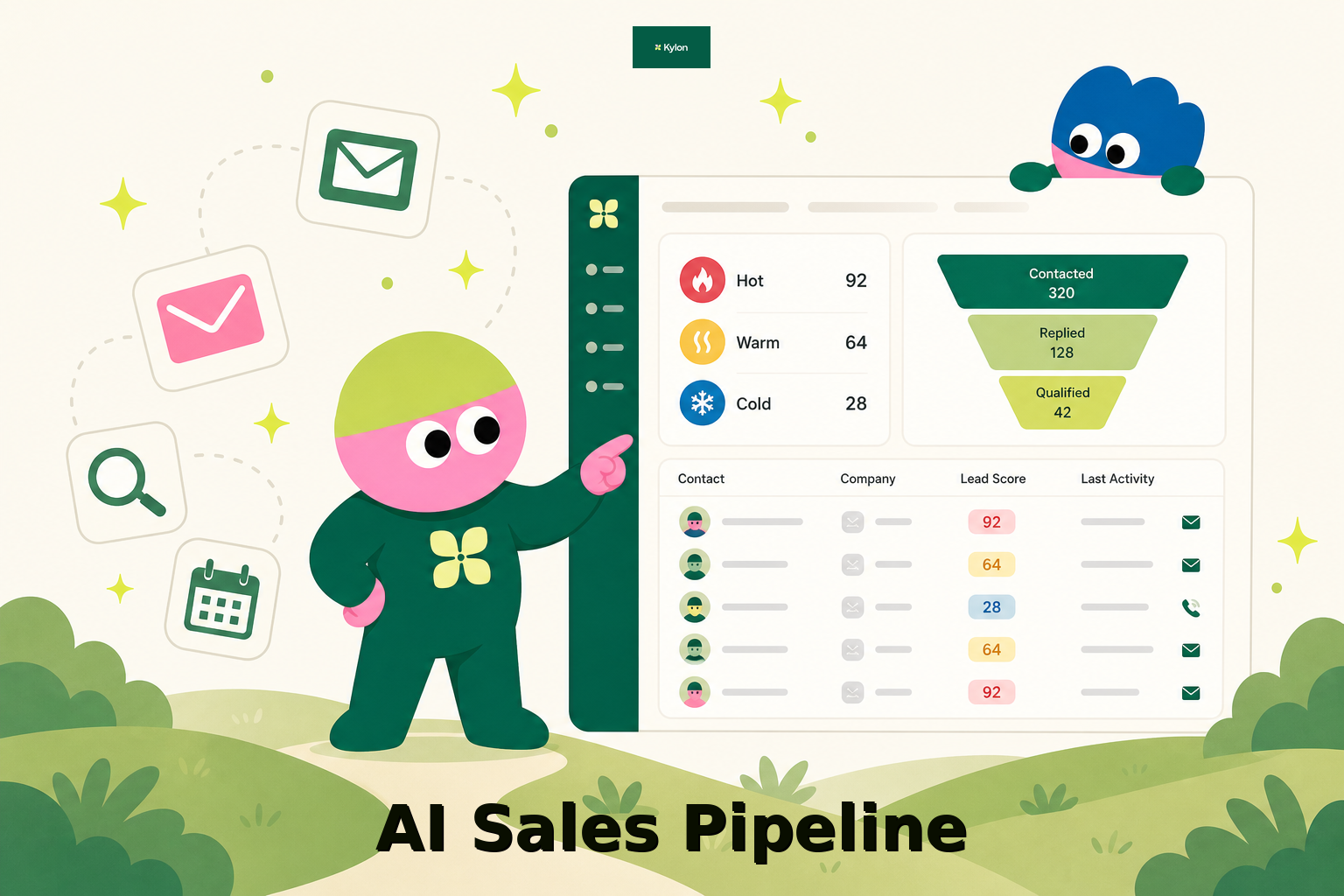
How a US Hospitality Firm Built an AI Sales Pipeline with Kylon
A US-based hospitality company used Kylon to automate 1,000-contact outreach, AI reply scoring, and lead routing.
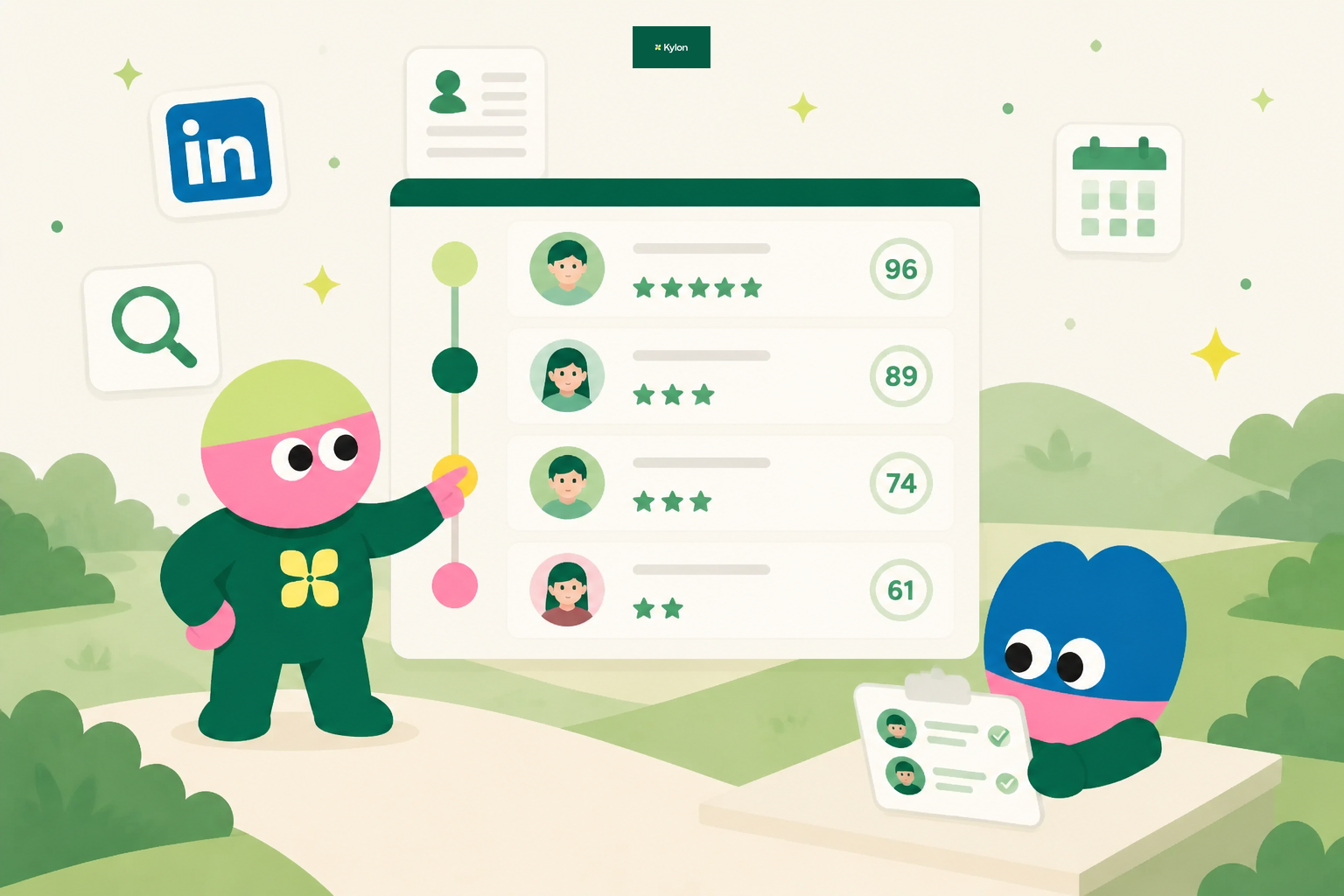
How an AI Startup Automated Talent Sourcing with Kylon
A growing AI startup built a recruiting system where agents parse resumes, score candidates against open roles, and manage outreach, all from one room with a structured database.