Travel / App template
Travel Desk
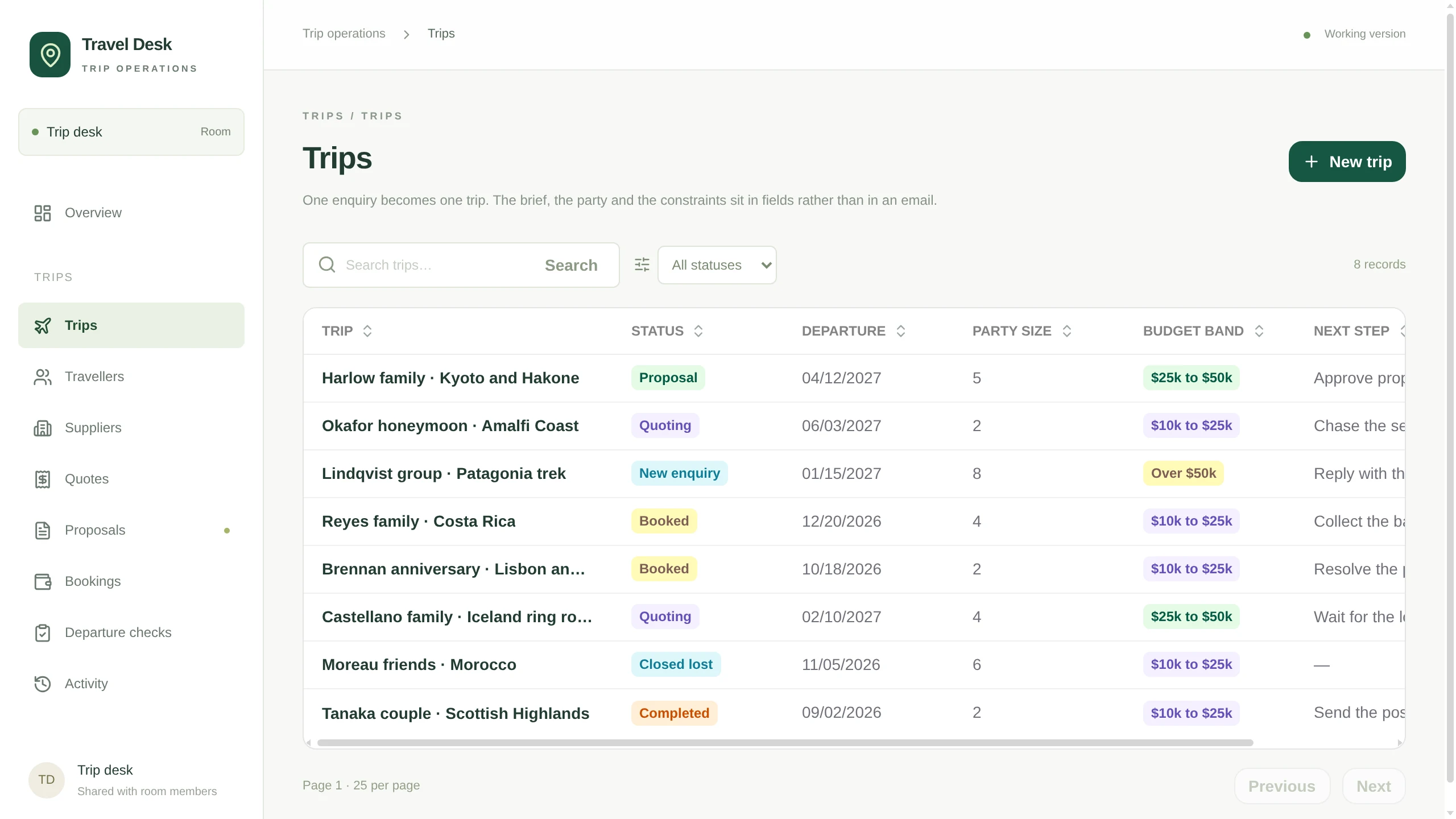
A custom trip is one brief and seven supplier conversations that all have to hold the same dates and the same party. This template keeps the enquiry, the travellers, every supplier quote, each version of the proposal, the deposit and balance, and the pre-departure check on one set of linked records, so the state of a trip is a fact on the screen rather than a search through someone's inbox.
What it puts on screen
01
The brief lives in fields
Party size, dates, budget band, destination, travel style, accessibility and dietary notes sit on the trip record, so every supplier request and every proposal reads from the same facts.
02
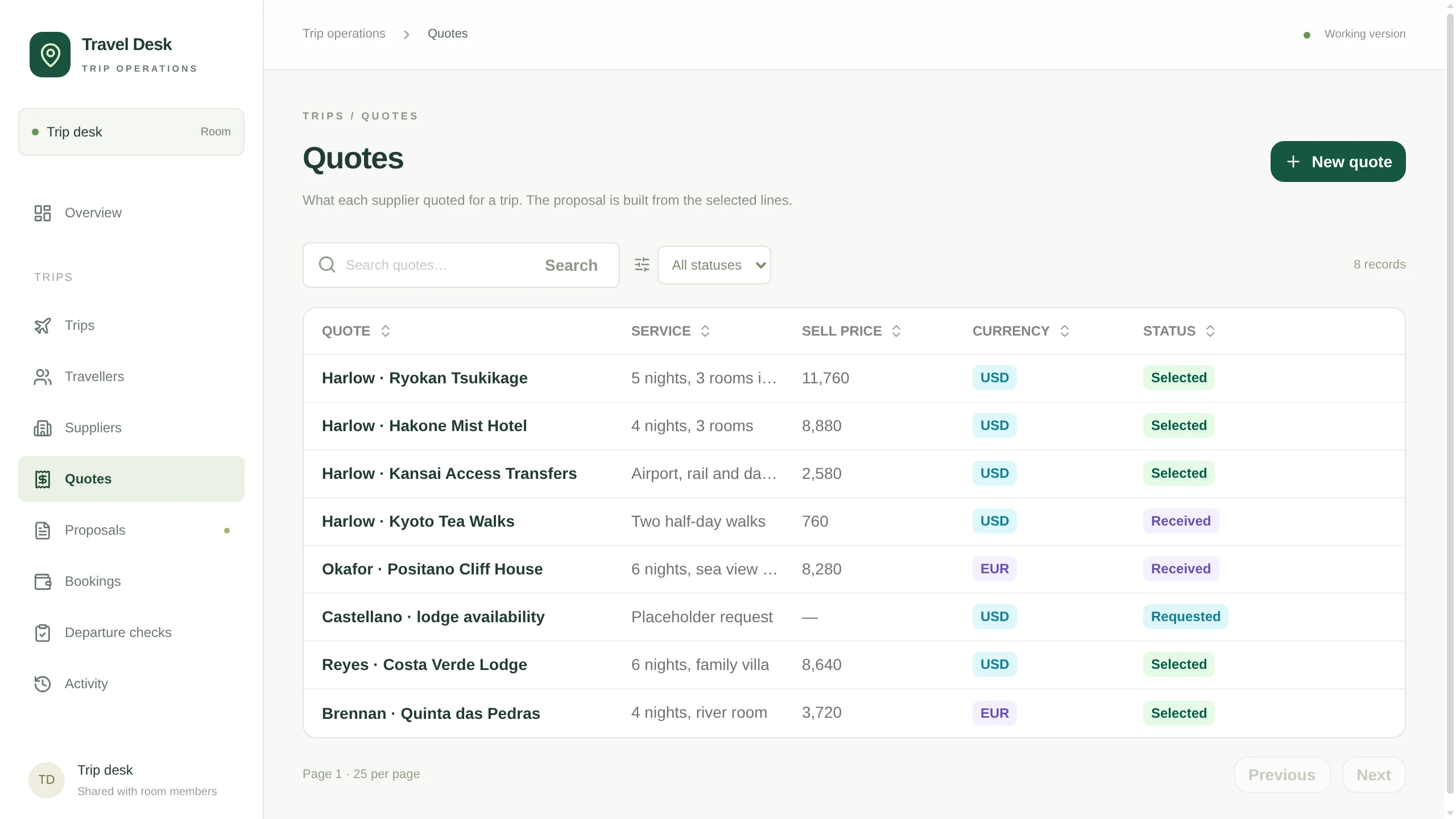
Quotes hang off the trip
Each supplier quote is its own line against the trip: requested, received, selected or declined, with net cost and sell price. The proposal is built from the selected lines.
03
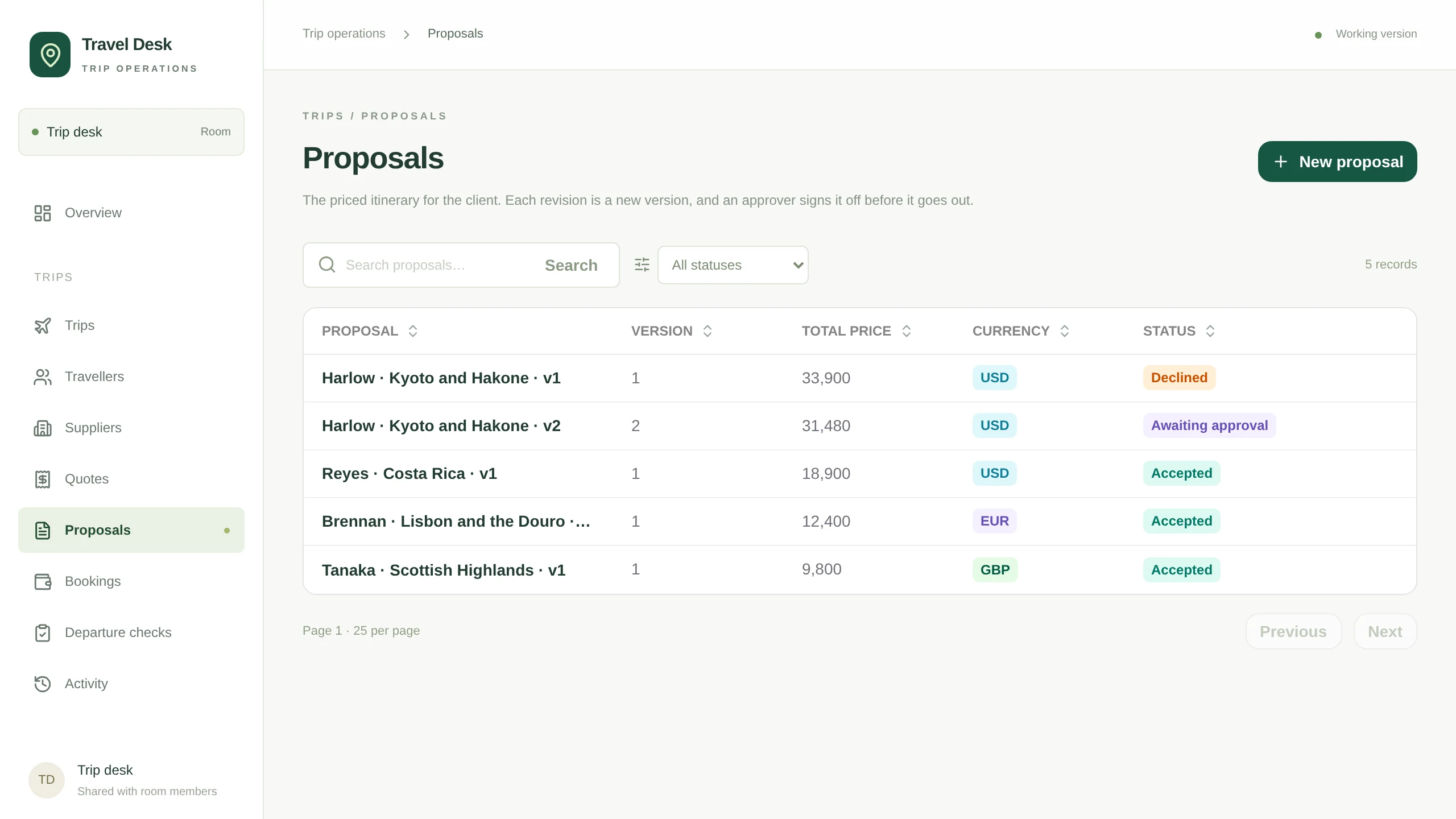
A proposal has versions and an approver
A proposal moves through draft, approval, sent and accepted, and a revision is a new version rather than an overwrite. The approver named on it signs it off before it goes out.
04
After the deposit, a dated check
An accepted proposal opens the booking with its deposit and balance, and a departure check for passports, the rooming list, dietary notes and documents. A passport inside six months of the return date holds the check open.
The screens
Three things the template leaves to you
- Which trip stages your desk actually uses, and what you call them.
- Who approves a proposal, and whether the advisor or a senior planner owns the margin.
- Which pre-departure items a trip cannot leave without, and how far ahead each one is due.
The setup guides inside the archive walk your agent through each one.
Questions people ask first
Is this a booking engine?
It is the coordination record around the booking: the enquiry, the supplier quotes, the proposal, the deposit and balance, and the pre-departure check. Reservations stay with the suppliers and the tools you already book through.
Does it email suppliers or clients?
Not on its own. Mail is not connected in the template, so the App records what was asked, what came back and what was sent. Connect a mailbox and your agent can draft supplier requests and proposals from the trip record for you to send.
Can it check passports before a trip leaves?
Yes, against the dates on the record. The departure check stays open while any traveller's passport expiry is missing or falls inside six months of the return date, and while the balance is not recorded as received.
Paste this at your agent
Every client, traveller, supplier, price and email that ships with it is invented and labelled DEMO, and the addresses sit on a reserved .example domain, so the first screen is safe to show anyone. Mail, calendar, payments and booking systems are not connected: sending a proposal or recording a deposit records the fact inside the App and sends nothing out until you connect an account.
Download https://kylon.io/app-templates/travel-desk-template.zip and build me a travel agency trip desk from it. Unpack it, read README.md and TEMPLATE_GUIDE.md, and follow them: create the App, provision its database, copy the source into the checkout, replace the placeholder app id and base URL, then push a draft and send me the link. Never run SQL by hand. The numbered files in db/migrations apply themselves in order to a new empty database and seed the demo trips, travellers, suppliers, quotes, proposals, bookings and departure checks, so the pipeline is full on the first open. Leave those rows in. Then stop. Do not import our real clients, do not connect our mailbox, calendar or payment accounts, and ask me before anything real goes in.
More in the gallery
Sales / App template
General CRM
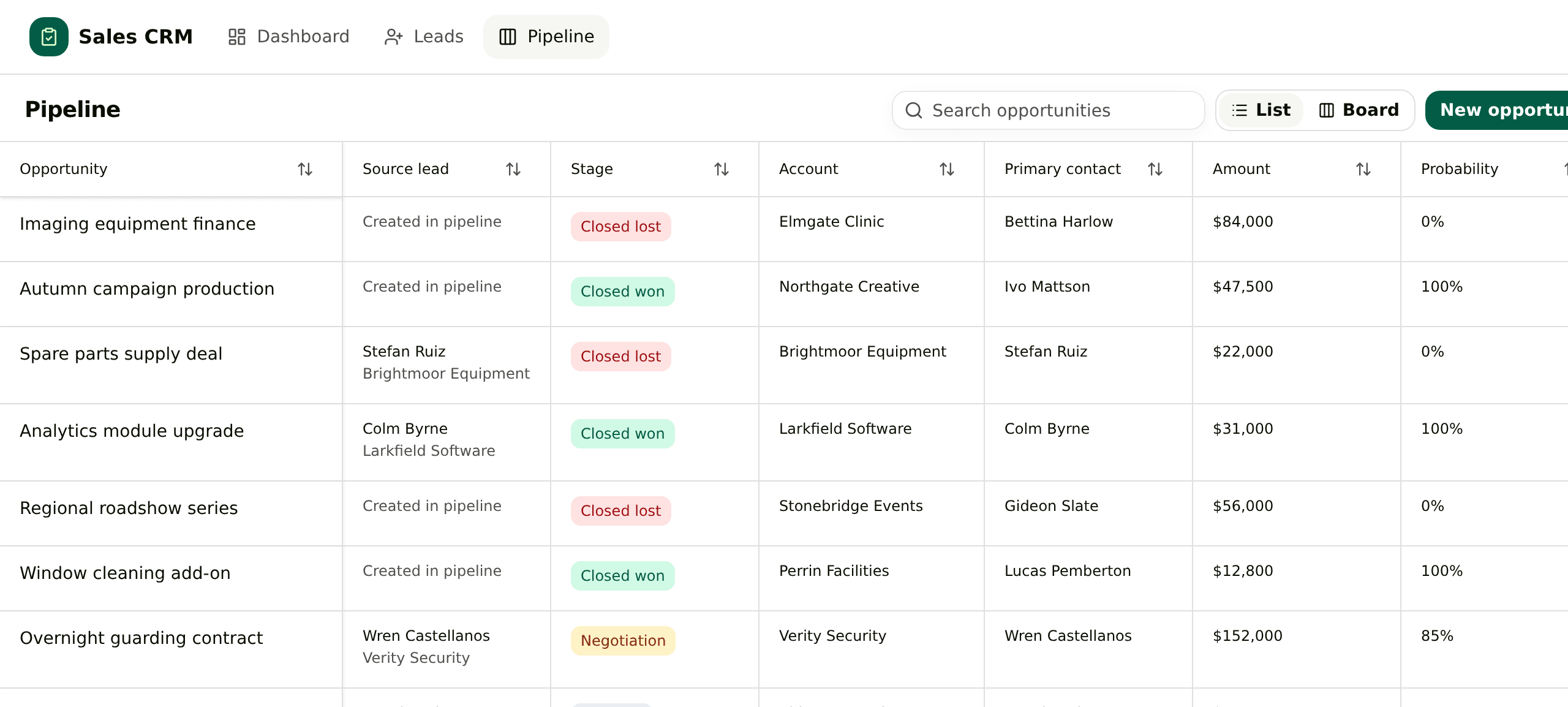
Leads, accounts, contacts and opportunities in one App. Converting a lead writes the account, the contact and the deal together, and the deal keeps reading back to the enquiry.
Marketing / App template
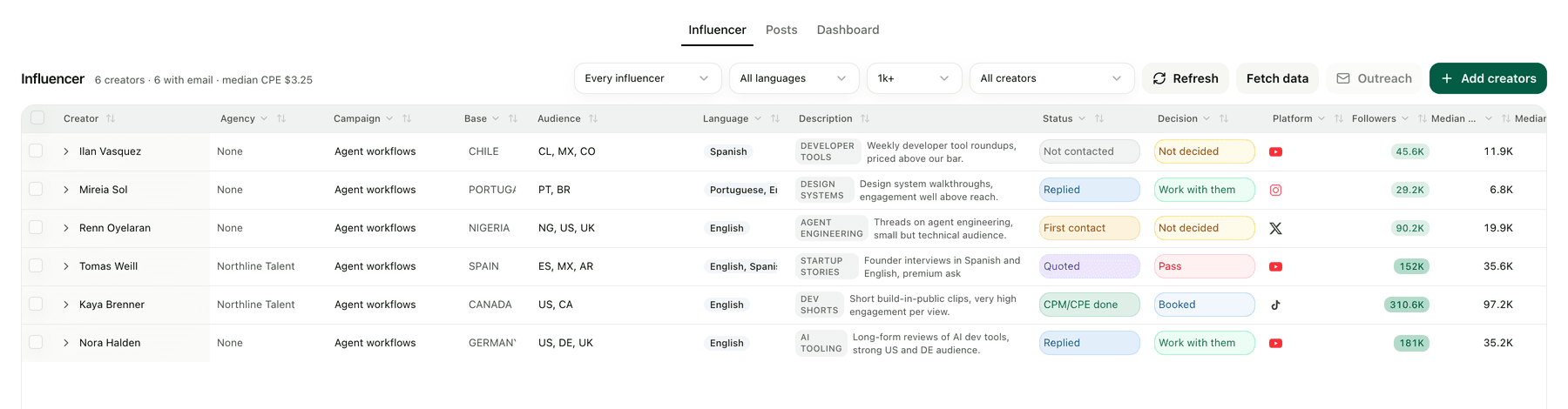
Creator Management
A creator roster priced against the median of each creator's last ten posts, with outreach and posts tracked through to signups.
Ecommerce / App template
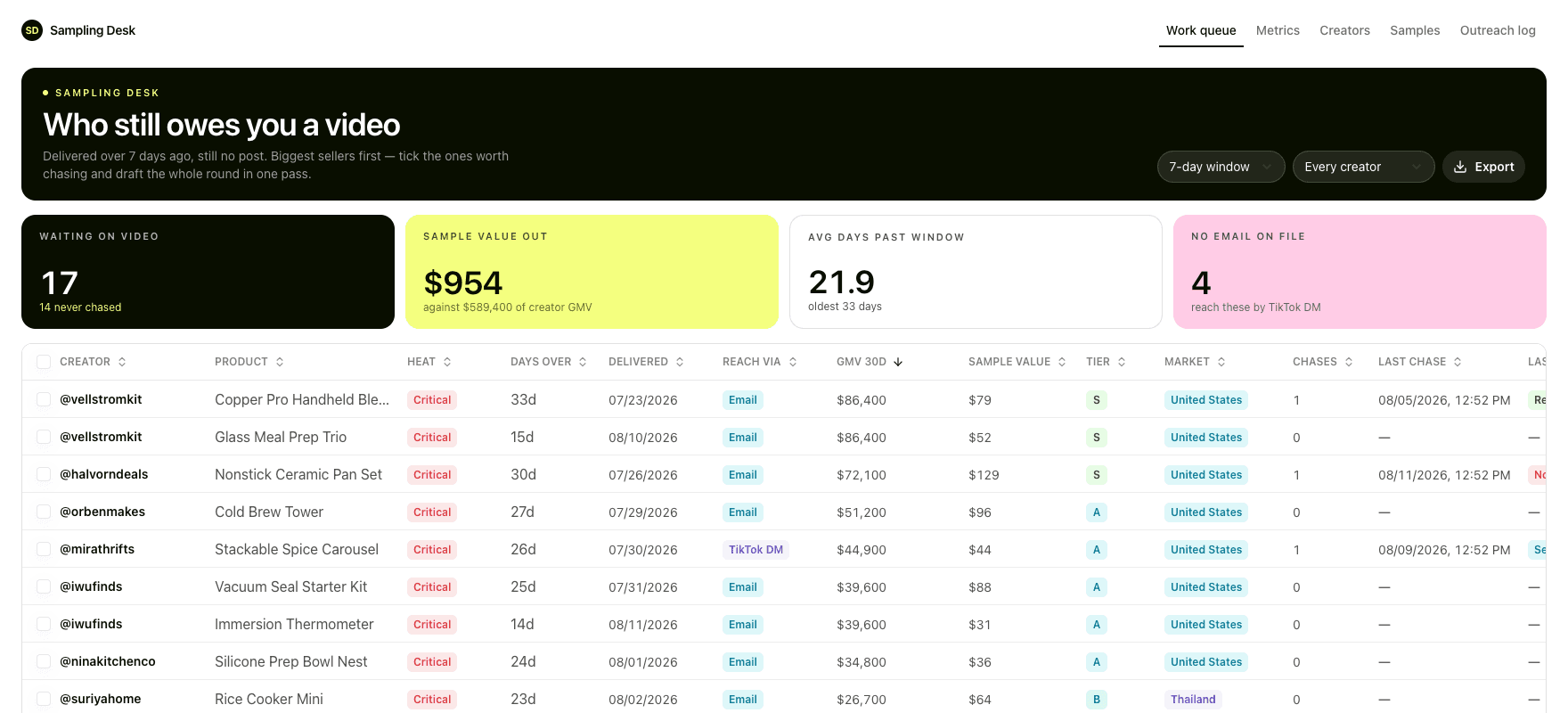
Sampling Desk
One queue for the samples that shipped and never became a video, biggest seller first.
Construction / App template
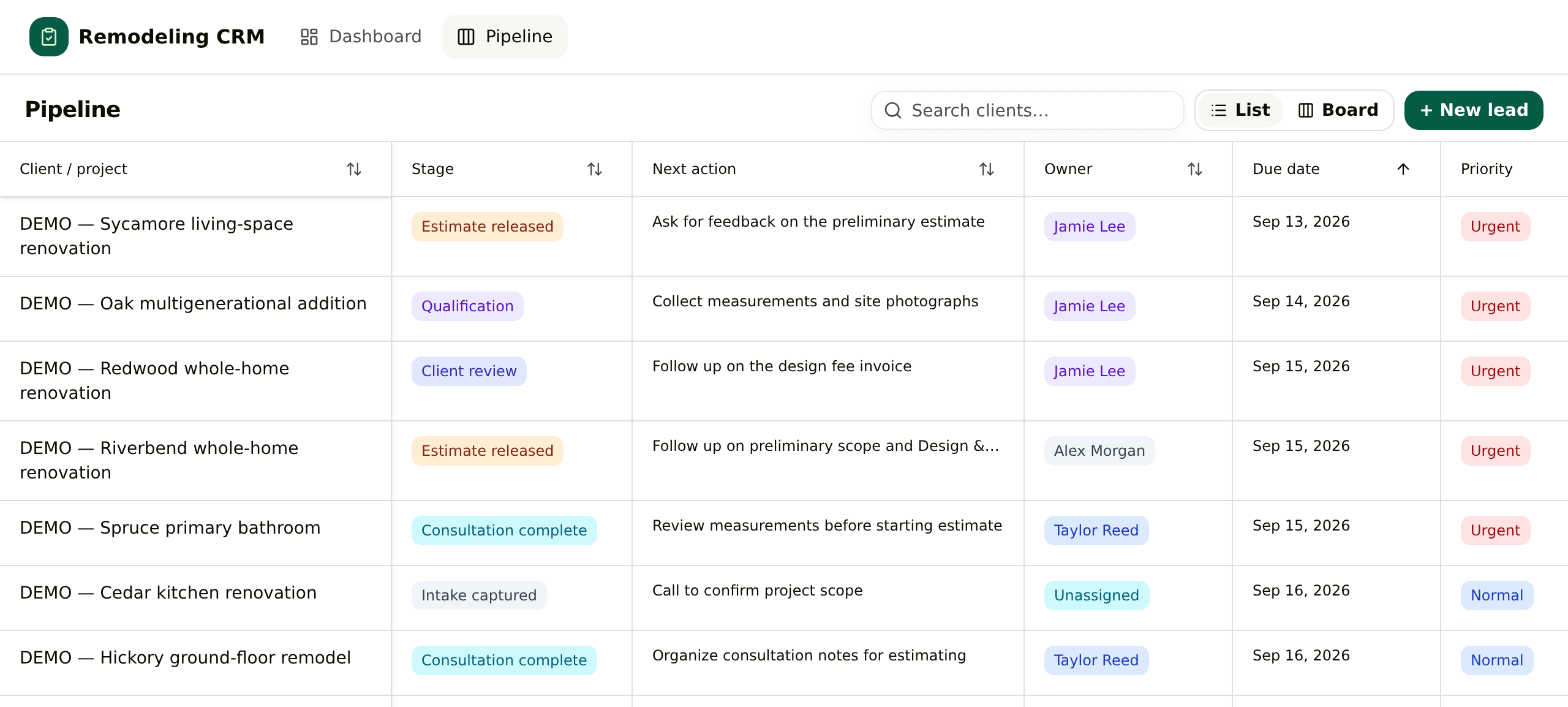
Remodeling CRM
One board for residential renovation sales: qualify, consult, estimate, then collect the Design and Discovery fee.
Hiring / App template
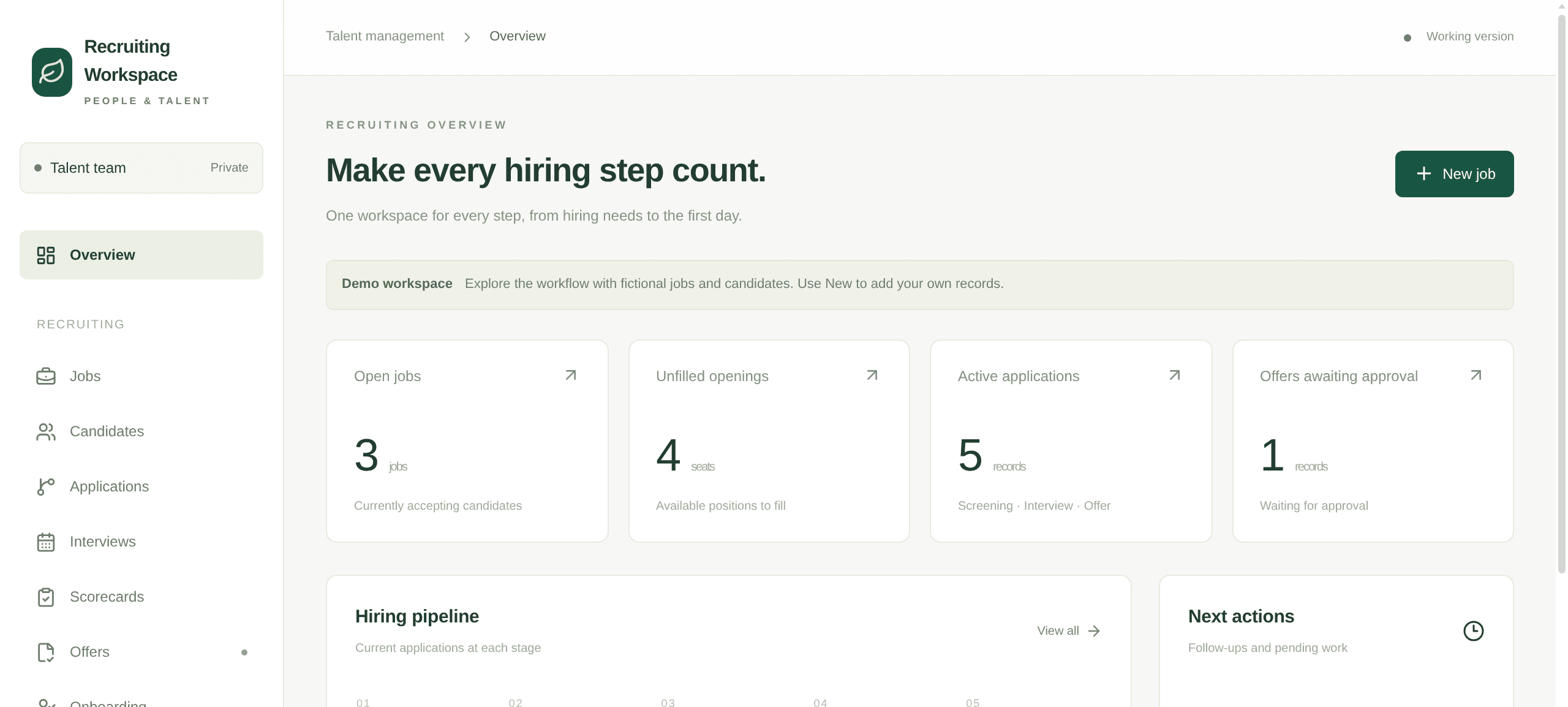
Recruiting Workspace
In-house hiring in one App: jobs and their openings, applications by stage, interviews with scorecards, offer approvals and the onboarding handover.
Yours will not look exactly like this.
That is the point. The template gives your agent a running start, then the two of you change it until it matches how the work actually goes.